Korean clothing sizes often run narrower or shorter than foreign shoppers expect, but one conversion chart is not enough. The safest way to buy clothes in Korea is to compare Korean size labels with centimeter measurements from clothes that already fit you.
Last updated: May 27, 2026. Product labels, prices, tax refund handling, return rules, store policies, and stock can change, so re-check before buying.
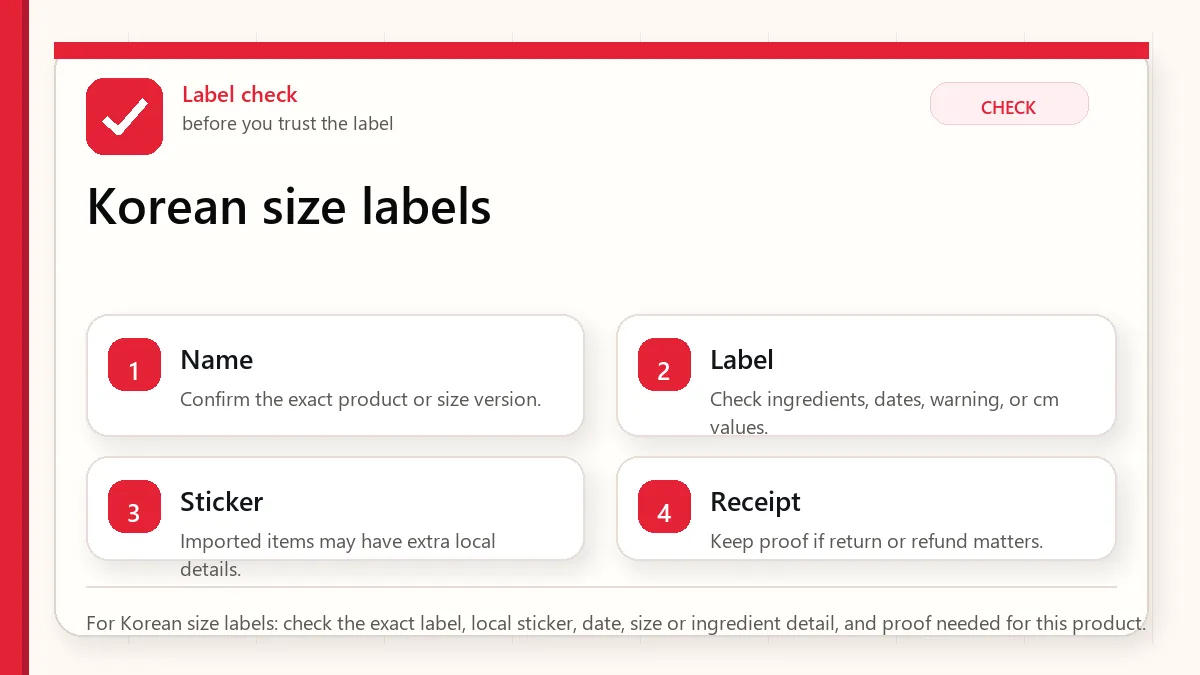
Korean shirt size to US: the safer way to compare
A rough shirt conversion can help you start, but it should never be the final decision. Korean men’s tops often use numbers like 95, 100, 105, or 110. Women’s clothing may use 44, 55, 66, 77, 88, or letter sizes such as S, M, L. But brands cut differently, oversized styles are common, and some boutiques carry only one or two sizes.
| Korean label you may see | Often feels like | What to check |
|---|---|---|
| Men’s 95 | Small to slim medium in some brands. | Chest width, shoulder width, sleeve length. |
| Men’s 100 | Medium in many local charts. | Whether the fit is slim, regular, or oversized. |
| Men’s 105 | Large in many local charts. | Chest, shoulder, and total length. |
| Women’s 55 | Small in many local charts. | Bust, waist, shoulder, and fabric stretch. |
| Women’s 66 | Medium in many local charts. | Actual garment width, not just label. |
| Free size | One limited size range, not universal. | Flat measurements and model info. |
Use this table as a starting map, not a promise. A Korean size 100 in a relaxed sweatshirt can feel larger than a 100 in a slim dress shirt. A “free size” cardigan can fit many bodies, while a “free size” blouse with no stretch may be narrow at the shoulders or bust. The number is only a label; the garment measurements are the truth.
The measurement method that prevents most mistakes
Before shopping seriously, measure one item you already own and like. Lay it flat. Measure shoulder width, chest width from armpit to armpit, sleeve length, total length, waist, rise, thigh, hip, and inseam depending on the garment. Save those numbers in centimeters in your phone. Korean stores and online shops often list dimensions in centimeters, so this simple note becomes your personal size converter.
- Shoulder width: important for shirts, jackets, blazers, coats, and dresses.
- Chest width: double the flat width if comparing to body chest circumference.
- Total length: determines whether a top is cropped, regular, or long on you.
- Waist and hip: critical for skirts, pants, and fitted dresses.
- Inseam: protects taller shoppers from ankle-length surprises.
- Fabric stretch: can decide whether a small difference matters.
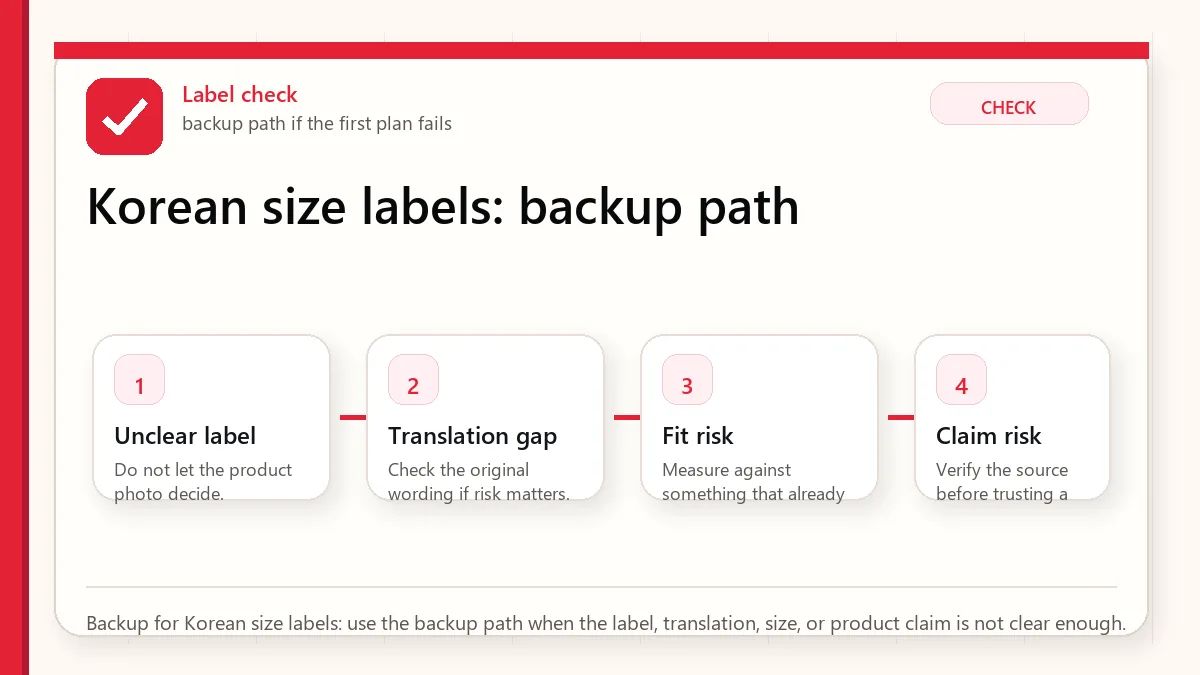
What free size means in Korea
“Free size” does not mean one size fits every visitor. It usually means the item is sold in one size and designed to fit a limited range. That range may be generous for loose knits, cardigans, sweatshirts, or elastic-waist skirts. It may be narrow for fitted shirts, blouses, coats, mini skirts, tailored pants, and non-stretch dresses.
If a free-size item lists a model height and weight, use it as context, not as judgment. Look at shoulder seams, sleeve length, where the waist hits, and whether the model is wearing an intentionally oversized style. A free-size item that looks oversized on a petite model may fit a taller shopper as regular, cropped, or tight.
Why Korean clothes may feel smaller
Several factors combine. Many Korean fashion brands design around local fit preferences and model proportions. Street shops may buy from wholesalers that produce limited size runs. Boutiques may focus on visual style rather than inclusive sizing. Some clothes are meant to be worn slim, cropped, or neat. Other pieces are intentionally oversized, but oversized in Korea still follows a specific shoulder and length logic.
This does not mean foreign shoppers cannot buy Korean clothes. It means the best shoppers stop asking “Am I a medium?” and start asking “What are the measurements?” Once you use centimeters, Korean shopping becomes much less mysterious.
Online shopping: read the Korean size chart
Online Korean fashion stores often provide a size table with terms such as shoulder, bust/chest, sleeve, armhole, hem, waist, hip, rise, thigh, and length. Translation apps can help, but check the diagram or product photos too. Some charts use flat garment measurements. Others may use body recommendations. If the chart says there can be a 1-3 cm difference due to measuring method, do not cut it too close.
| Korean chart clue | Meaning for shoppers |
|---|---|
| cm measurements | Best signal. Compare to your own garment. |
| Model size | Useful context, but not enough by itself. |
| Fabric content | Stretch, thickness, and lining affect fit. |
| Fit description | Slim, regular, loose, oversized, cropped, long. |
| Exchange and return policy | Check before paying, especially for sale items. |
In-store shopping in Seoul
In major shopping areas, some stores allow trying on clothes and some do not, especially for light tops, white garments, sale items, or small boutiques. Ask before assuming. If trying on is not possible, compare the garment to your body quietly: shoulder seam to shoulder, waistband around your waist, sleeve against your arm, and length against a similar item you are wearing. This is not perfect, but it is better than buying only by label.
For shoppers who usually need extended sizes, Korean street boutiques can be hit or miss. Larger department stores, global brands, sportswear shops, select shops, men’s sections, oversized streetwear brands, and online global shipping options may be easier than small one-size boutiques. If clothing is a major trip goal, build time to browse rather than expecting every shop to fit.
Shoes are easier because Korea uses millimeters
Korean shoe sizing is often shown in millimeters, such as 230, 240, 250, 260, or 270. This can be clearer than clothing labels because it is tied to foot length. Still, width matters. If you have wide feet, high arches, or need orthopedic support, try shoes in person when possible. Some fashion shoes may run narrow even when the length is correct.
Return and exchange caution
Do not assume return rules are the same as your home country. Small shops, market stalls, discounted items, cosmetics, undergarments, accessories, and opened packaging can have strict rules. Ask before payment if size is uncertain. For online purchases, check whether exchanges are possible from your country, whether return shipping is realistic, and whether sale items are final.
Before-you-buy checklist
- Save your best-fitting garment measurements in centimeters.
- Check shoulder, chest, and length for tops before caring about S/M/L.
- For pants, check waist, hip, rise, thigh, and inseam.
- Treat free size as limited size, not universal size.
- Ask about fitting rooms and return rules before paying.
- If between sizes, consider fabric stretch, silhouette, and whether you can exchange it.
The foreign shopper’s size workflow
Use this workflow every time you are unsure. First, ignore the label for a moment. Second, find the centimeter chart. Third, compare the chart to a garment you already own, not to your body in a rushed fitting room. Fourth, check the fabric and silhouette. Fifth, decide whether you can exchange or return it if the fit is wrong.
| Question | Why it matters | Safer action |
|---|---|---|
| Is this slim, regular, or oversized? | The same number can fit very differently. | Look at shoulder drop, chest width, and model fit. |
| Is the chart flat or body measurement? | Flat chest width and body chest are not the same. | Compare like with like and double flat widths when needed. |
| Does the fabric stretch? | One or two centimeters can matter in non-stretch fabric. | Be stricter with cotton shirts, denim, coats, and blazers. |
| Can I return or exchange? | Tourist purchases can be final or inconvenient to return. | Ask before paying, especially at boutiques and markets. |
Korean size words to recognize
Even if you do not read Korean comfortably, recognizing a few chart words helps. 어깨 means shoulder, 가슴 means chest or bust, 총장 means total length, 소매 means sleeve, 허리 means waist, 엉덩이 means hip, 밑위 means rise, and 안감 means lining. Translation apps can read these, but knowing what they refer to keeps you from comparing the wrong numbers.
If a shop only gives S/M/L with no centimeter chart, treat the purchase as higher risk. That does not mean never buy it. It means the price, return rule, fabric stretch, and how badly you want the item should all be part of the decision.
If your question is specifically shirt size
If you searched for “korea shirt size,” “korean size to us,” or “korean xxl size,” use the dedicated Korea shirt size guide for foreigners. This broader page covers clothing size habits across tops, shoes, free size, shopping, and return risk; the shirt guide goes deeper into 95, 100, 105, free size, XXL, and flat centimeter measurements.
Official and internal checks to use with this guide
There is no single official tourist conversion chart that can guarantee fit across Korean brands. That is exactly why this guide uses a measurement workflow instead of pretending one chart solves everything. For shopping planning, connect this with Before You Shop in Korea, What to buy in Korea, Korea tax refund for tourists, and What not to buy in Korea.
FAQ
What is a Korean shirt size 100 in US size?
It often works as a medium starting point for men’s tops, but it depends on the brand and fit. Check chest width, shoulder width, sleeve length, and total length in centimeters.
What does Korean free size mean?
It means the garment is sold in one size. It may fit a limited range, but it is not a universal one-size-fits-all promise.
Do Korean clothes run small?
Some do, especially slim, boutique, and one-size items. Others are intentionally oversized. Measurements matter more than the general stereotype.
Should I buy clothes in Korea if I cannot try them on?
Only if the measurements, fabric, and return risk make sense. For expensive pieces, do not buy blind unless you can absorb the risk.
Related guides
- Korea shirt size guide for foreigners
- Before You Shop in Korea
- What to buy in Korea
- Korea tax refund for tourists
- Where to buy Korean products
- Olive Young shopping guide
Sources and verification notes
Use these sources to re-check app, identity, labeling, or travel details close to the day you act. App flows and eligibility can change.
Last checked: June 2, 2026. Re-check the latest product label, store policy, and official refund or safety page before buying because sizing, stock, labels, and return rules can change.