The best things to buy in Korea are useful after the trip, easy to carry, and simple to verify. K-beauty, packaged snacks, stationery, small design goods, clothing, and traditional crafts can all be good choices, but popularity alone does not make an item worth your budget or luggage space.
Choose a category before choosing a viral product
| Category | Why it can work | Check before paying |
|---|---|---|
| K-beauty | Broad selection and Korea-specific launches. | Ingredients, expiry date, skin fit, sealed condition, and return policy. |
| Packaged food | Easy to share and often available in travel-friendly sizes. | Allergens, expiry date, crushing risk, and destination customs rules. |
| Stationery and design goods | Light, practical, and easy to pack. | Whether the item is genuinely useful or already easy to buy at home. |
| Clothing and accessories | Local brands and styles may be difficult to find abroad. | Measurements, material, care label, final-sale terms, and luggage volume. |
| Traditional crafts | A clear connection to place and maker. | Origin, fragility, packaging, and whether the description supports the price. |
Price-check the item you are actually holding
Compare the exact model, size, quantity, and included accessories. A promotion can make one version cheaper while a different size costs more than at home. For expensive purchases, compare the city-store price, any confirmed tax refund, warranty coverage, and the cost of carrying or shipping the item.
Do not count a tax refund before the store confirms that the purchase and traveler qualify. Keep the original receipt and follow the current process described by the store and Korea Customs Service.
Beauty and food need a label check
For cosmetics, read the ingredient list and test conservatively if your skin is sensitive. A product trending online may use an active ingredient, fragrance, or texture that does not suit you. Buy a reasonable amount before filling the suitcase with duplicates.
For snacks and food gifts, keep the original package and label. Check allergens for the recipient and the import rules of the country where the food will enter. The Ministry of Food and Drug Safety is the official Korean source for food, cosmetics, and safety notices, while the destination country controls what can cross its border.
Fit and return terms matter more than the size letter
Korean clothing labels do not translate perfectly into one international size chart. Use garment measurements, try the item on when possible, and ask whether discounted or opened goods can be returned. Keep the receipt until the item has been checked in normal light and with the clothing you plan to wear it with.
The Korean Clothing Size Guide explains the measurement step. For beauty shopping, use the K-Beauty in Korea guide before building a product list.
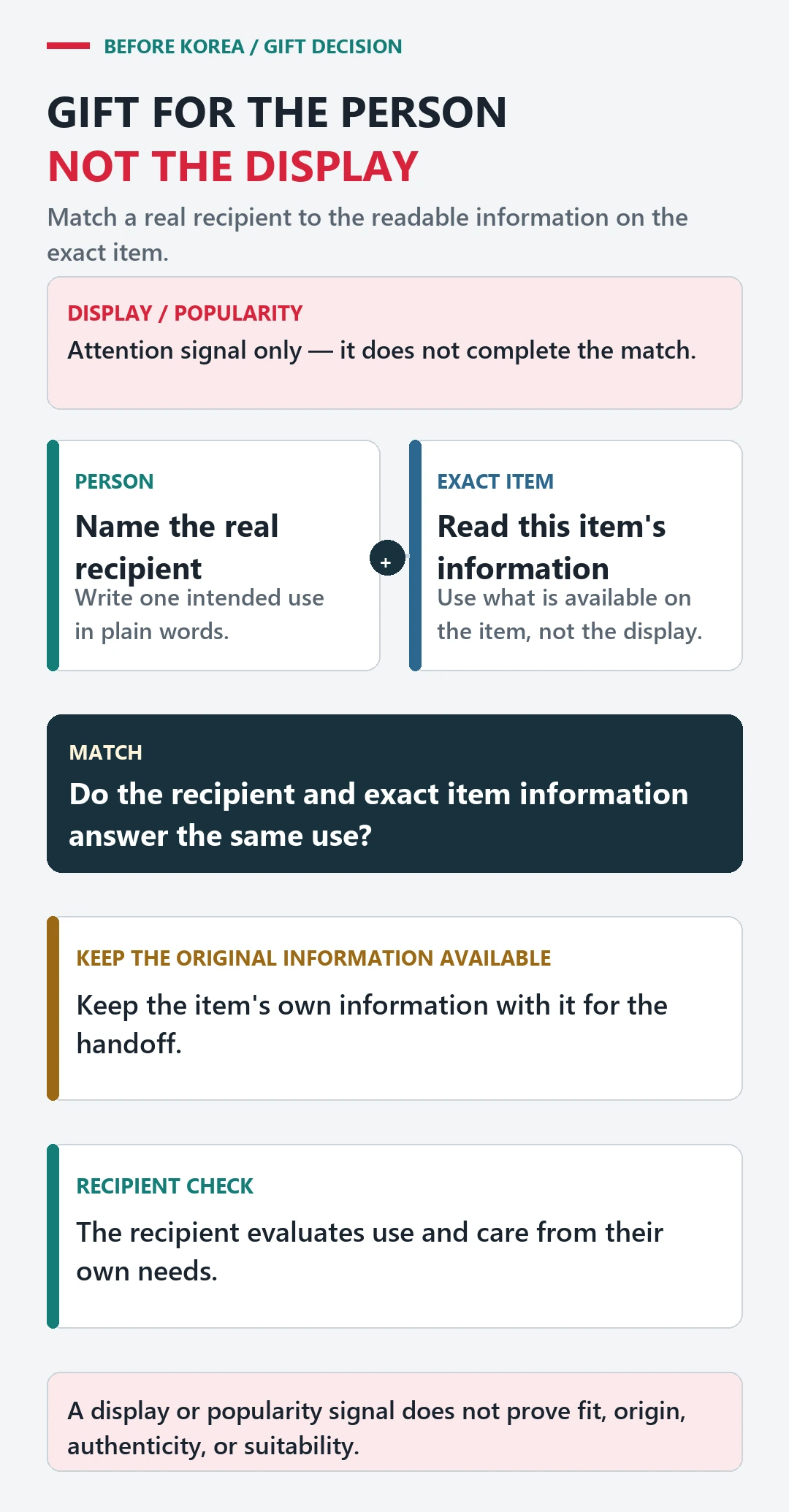
Buy gifts for the recipient, not the store display
- Choose sealed items when ingredients or hygiene matter.
- Avoid fragile glass for a trip with several hotel changes.
- Use neutral sizing for gifts unless you know the person’s measurements.
- Prefer a small item with a clear story over a bulky generic souvenir.
- Keep food, liquids, batteries, and sharp objects within baggage and customs rules.
Make the suitcase decision before checkout
Ask where the item will sit in the bag, how much it weighs, and whether it needs cabin handling. Stop when an extra purchase creates a baggage fee, breakage risk, or airport inspection problem larger than its value. Heavy and fragile shopping is easier near the end of the trip.
For a broader checkout plan, continue with Before You Shop in Korea. Check current visitor information through VISITKOREA, and use the seller’s current product and return terms for the final purchase decision.