Start with the route you will actually take
For your first subway or bus ride in Korea, prepare a transportation card, use a local route app, check the station exit or bus stop direction, and leave extra time. The hardest part is usually not the train ride; it is choosing the right entrance, exit, platform, or bus direction.
Last checked: August 24, 2026. Re-check the official operator, app, fare, or route page before acting, because routes, prices, labels, rules, app screens, eligibility, and store/service policies can change.
The ride is simple when the direction and exit are clear
Korea's public transport can be very visitor-friendly, but the small navigation details matter: the correct platform direction, bus stop side, transfer path, exit number, and card balance. This guide is for avoiding the mistakes that add twenty minutes to a five-minute ride.
Subway vs bus for visitors
| Mode | Best for | Main challenge | Preparation |
|---|---|---|---|
| Subway | Predictable city movement and station-based routes. | Large stations, transfers, exits, and stairs. | Route app, exit number, transit card. |
| Bus | Direct neighborhood routes and places away from subway. | Correct direction, stop names, and traffic. | Map app, stop confirmation, tap habits. |
| Taxi backup | Late-night, luggage, or complex route situations. | Address communication and fare expectation. | Korean address and payment backup. |
Checks before the first tap
- Prepare a transport card or verified payment method.
- Save your destination in Korean and English.
- Check route at the time you plan to travel.
- Look for final station exit, not only station name.
- Avoid first-time complex transfers when carrying heavy luggage.
Move through transit one decision at a time
- Use a local map app to choose route.
- Check line color, direction, transfer station, and exit number.
- Tap in and out as required.
- Stand aside while checking your phone.
- For buses, confirm the stop is on the correct side of the road.
- After arrival, save the return route while still oriented.
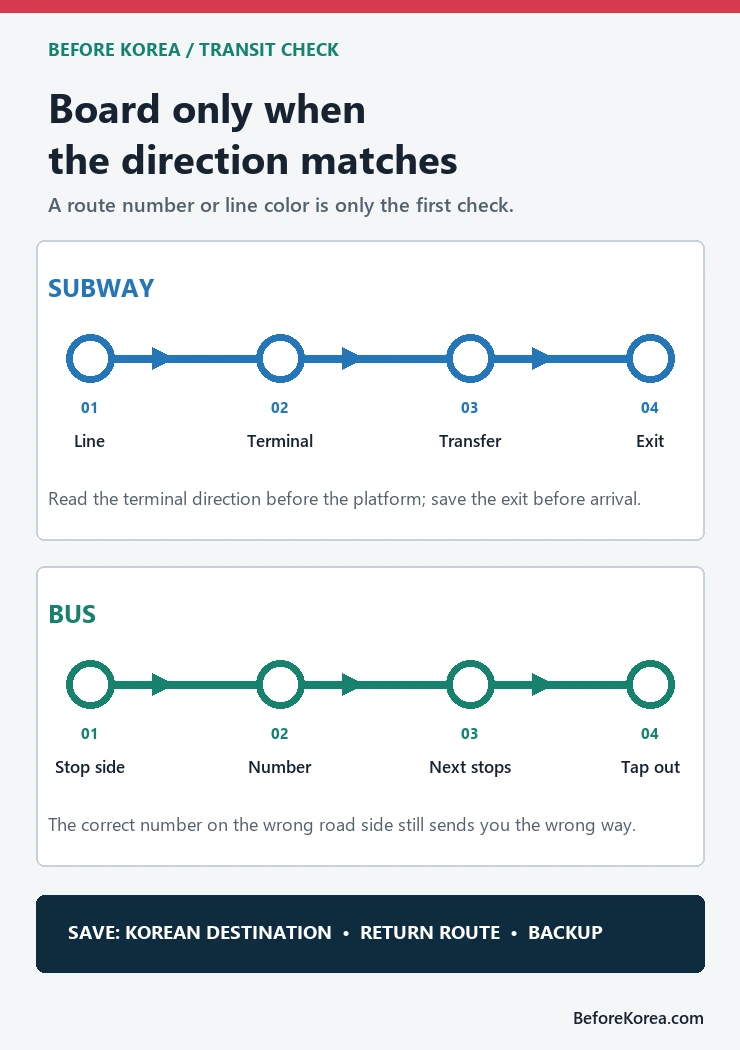
Where first rides usually go wrong
Wrong station exit
Re-check the exit number before leaving the paid area if possible. A wrong exit can add a long walk.
Wrong bus direction
Check the next stops in the app and the road side before boarding.
Transit card balance is low
Top up before late-night travel or long routes.
Transfer is too complex with luggage
Use a simpler route, airport bus, or taxi when luggage makes public transport inefficient.
Choose subway or bus based on recoverability
| Situation | Better approach | What to verify |
|---|---|---|
| First subway ride | Choose a simple route with few transfers. | Line direction and exit. |
| Hotel with luggage | Prefer fewer transfers over fastest time. | Elevator availability and walking distance. |
| Bus route | Confirm stop direction and destination. | Traffic and correct side of road. |
| Late night | Check last service and taxi backup. | Final train/bus time. |
What not to assume from a route result
- Do not assume a station name is enough; exit number matters.
- Do not assume the fastest route is best with luggage.
- Do not assume every bus stop across the street serves the same direction.
- Do not stand in gate or stair flow while checking directions.
Transit details that make the city feel calmer
The exit number matters more than visitors expect
In large Korean stations, choosing the wrong exit can add a long walk, stairs, confusing underground passages, or an extra street crossing. When using a map app, do not stop at the station name. Check the suggested exit number and nearby landmark. This is especially useful when carrying luggage, meeting someone, or finding a small restaurant in a dense area.
Bus routes need one extra check
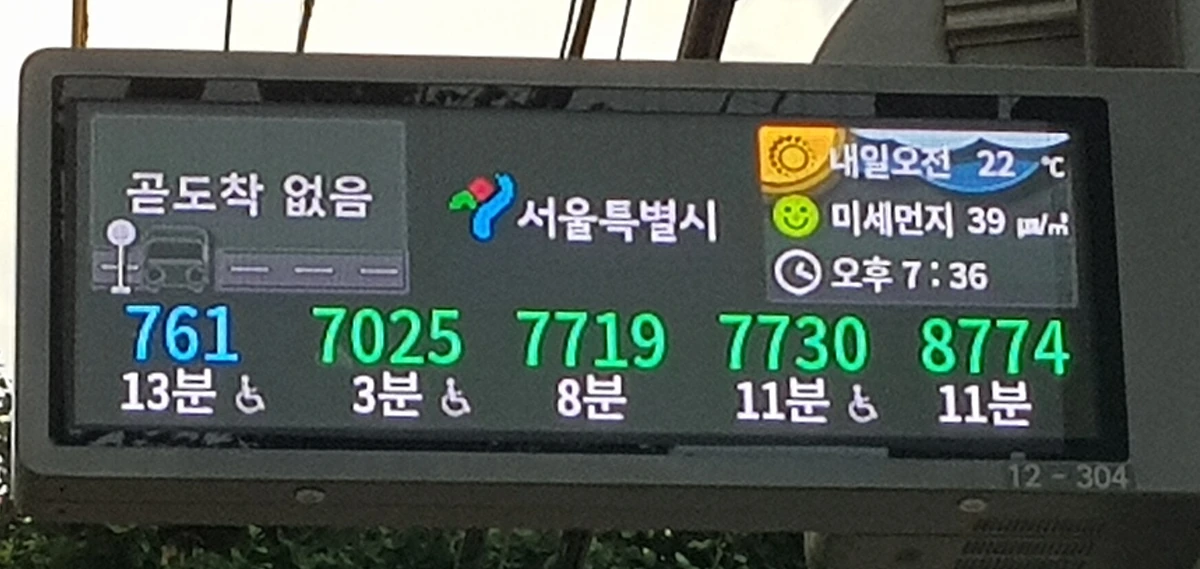
Buses can be efficient, but first-time visitors should confirm the direction, stop name, and whether the bus is local, trunk, express, or airport-related. The same road can have stops on opposite sides, and getting on in the wrong direction can waste more time than taking the subway. If you feel unsure, the subway is usually easier to recover from because stations are clearer and more forgiving.

Read next when transit connects to maps, T-money, or cash
This topic works best when it is not handled alone. Use the related guides below to connect the decision with maps, money, food, shopping, transit, and app backup planning.
- T-money Card in Korea
- Naver Map in Korea
- Cash Cards and ATMs in Korea
- Return to the related Before Korea hub
- Check the Before Korea Source Library
Related Before Korea guides
- T-money Card in Korea
- Naver Map in Korea
- Incheon Airport to Seoul
- Public Etiquette in Korea
- Before You Visit hub
Official links to check
Use these official links when the next step matters. This guide explains what to watch for, but app downloads, eligibility, prices, routes, policies, and service rules can change.
- T-money official site: Check current card, top-up, refund, and mobile T-money information.
- Seoul Climate Card official English page: Check coverage, card types, and tourist limitations before buying.
- WOWPASS official site: Check current prepaid card, exchange, app, and transit-card features.
- AREX official site: Check airport train routes, tickets, and operating information.
- Seoul official airport-to-city transport page: Check official Seoul guidance for airport train, bus, and taxi options.
- NAVER Map web: Use the web map to test place names, Korean addresses, routes, and station exits.
- NAVER Map on Google Play: Download the Android app from Google Play.
- NAVER Map on the App Store: Download the iPhone app from the App Store.
- Kakao Map web: Use Kakao Map to cross-check Korean place names, local search, and routes.
- KakaoMap on Google Play: Download the Android app from Google Play.
- KakaoMap on the App Store: Download the iPhone app from the App Store.
- Google Maps: Use Google Maps for saved places, broad planning, and familiar map features.
FAQ
Do I need a transit card?
It is highly practical for subway and bus travel. Prepare one or a verified alternative before relying on public transport.
Are subway signs in English?
VISITKOREA notes many public places including subway stations and bus stops have English signs, but apps and Korean names still help.
Is bus harder than subway?
Often yes for first-time visitors because direction, stop names, and traffic add uncertainty.
Source links to verify
Last updated
Last updated: 2026-08-24. Re-check official sources close to the day you travel, buy, eat, or use an app. Details involving prices, eligibility, transport, app features, opening hours, and refund rules can change.