A Korean food allergy card should do one job clearly: tell restaurant staff what you cannot eat, ask them to check hidden ingredients, and make it acceptable for them to say they cannot confirm. Translation alone is not enough in Korea because broths, sauces, marinades, shared grills, seafood paste, nuts, sesame, wheat, egg, milk, soy, and cross-contact can be invisible from the menu name.
Last checked: June 2, 2026. Restaurant recipes, packaged-food labels, and allergen notices can change. Use this as a communication tool, not medical advice.
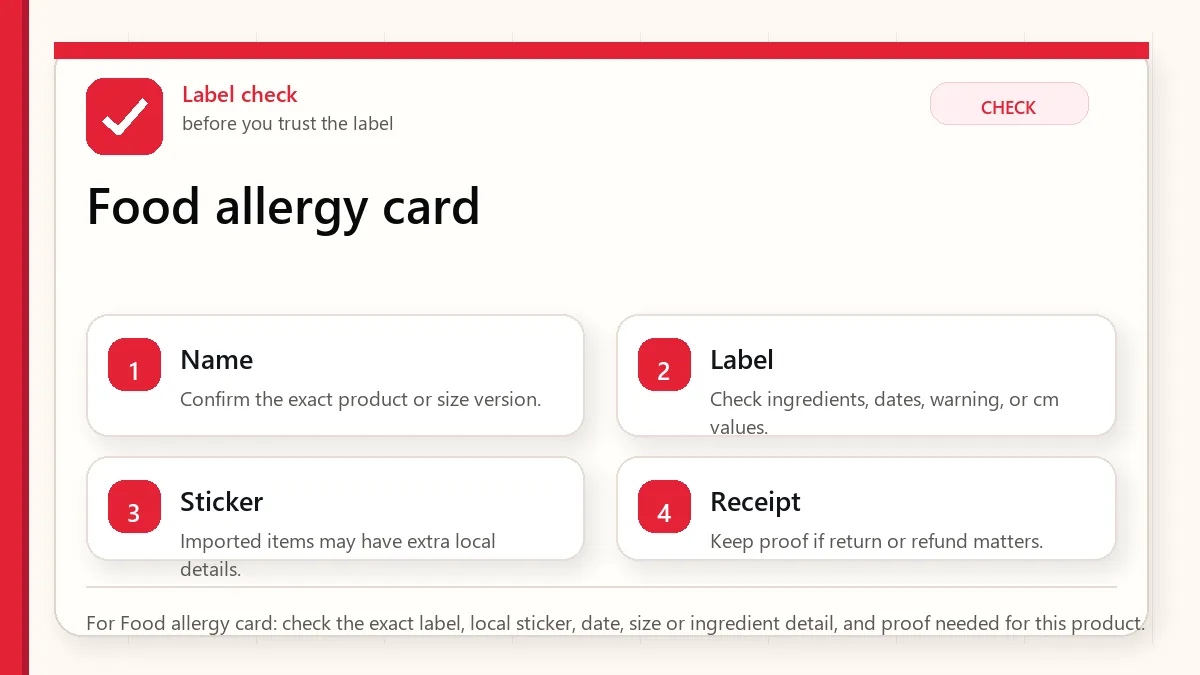
What to write on the card
| Card line | Why it matters | Example |
|---|---|---|
| My allergy | Name the exact allergen, not a broad diet preference | I am allergic to peanuts and tree nuts. |
| Severity | Staff need to know whether trace exposure is dangerous | Even a small amount can cause a serious reaction. |
| Hidden ingredients | Korean food may use broth, sauce, paste, oil, or powder | Please check sauce, broth, marinade, garnish, and frying oil. |
| Cross-contact | Shared grills, tongs, pans, and fryers can matter | If you cannot confirm, please tell me before I order. |
| Emergency note | Travelers need a backup plan | If I feel sick, please call 119. |
A practical English card text
I have a serious food allergy to: [ALLERGEN]. Please check the ingredients, sauce, broth, marinade, garnish, cooking oil, and shared cooking tools. If you are not sure, please tell me before I order. If I have a reaction, please call 119.
A Korean phrase to show staff
저는 [알레르기 식품] 알레르기가 있습니다. 소스, 육수, 양념, 고명, 조리기구, 튀김기름에 들어가는지 확인 부탁드립니다. 확실하지 않으면 주문 전에 알려 주세요. 응급 상황이면 119에 전화해 주세요.
Do not rely on this Korean text blindly for a life-threatening condition. Have a native speaker, medical professional, or trusted translation service review your exact allergen wording before travel.
Common allergen words to prepare
| English | Korean | Where it may appear |
|---|---|---|
| Peanut | 땅콩 | Sauce, dessert, snack, garnish |
| Tree nut | 견과류 | Bakery, dessert, salad, packaged snacks |
| Egg | 계란 / 달걀 | Kimbap, toast, pancakes, noodles, sauces |
| Milk | 우유 | Cafe drinks, bakery, dessert, cream sauce |
| Wheat | 밀 | Noodles, dumplings, fried food, sauces |
| Soy | 대두 / 콩 | Soy sauce, tofu, soybean paste, marinades |
| Shellfish | 갑각류 | Broth, seafood dishes, sauces |
| Sesame | 참깨 / 참기름 | Garnish, oil, dipping sauce, side dishes |
This table is a starting point, not a medical translation service. If your allergy is severe, prepare the exact Korean wording for your allergen and show it with your English text.
Where Korean meals hide allergens
| Food situation | What to ask about | Why it can be missed |
|---|---|---|
| Korean BBQ | Marinade, dipping sauce, shared grill, side dishes | The meat may look plain while sauce or banchan carries the risk |
| Tteokbokki or street food | Fish cake, broth, sauce, wheat, seafood, egg | Sauce and broth are not visible from the name |
| Convenience-store meals | Label, allergen notice, heating instructions | Translation apps may miss warnings or facility notes |
| Bakery/cafe items | Milk, egg, wheat, nuts, sesame, cross-contact | Display items may not show full ingredient details |
| Soup/stew/noodle dishes | Broth base, seafood, soy, wheat, egg, garnish | The broth can be the main risk |
How to use the card at a restaurant
- Show the card before ordering, not after food arrives.
- Point to the exact dish you want and ask whether it can be checked.
- If the staff look unsure, choose a simpler dish or leave.
- Do not ask for a guarantee from a restaurant that cannot verify ingredients.
- Carry medication and emergency instructions according to your doctor's advice.
The answer you should accept
A useful allergy card does not force the staff to say yes. It gives them a safe way to say no or unsure. If the restaurant cannot check broth, sauce, oil, or cross-contact, that is an answer. For high-risk allergies, treat uncertainty as a reason to choose another food.
Packaged food needs a different check
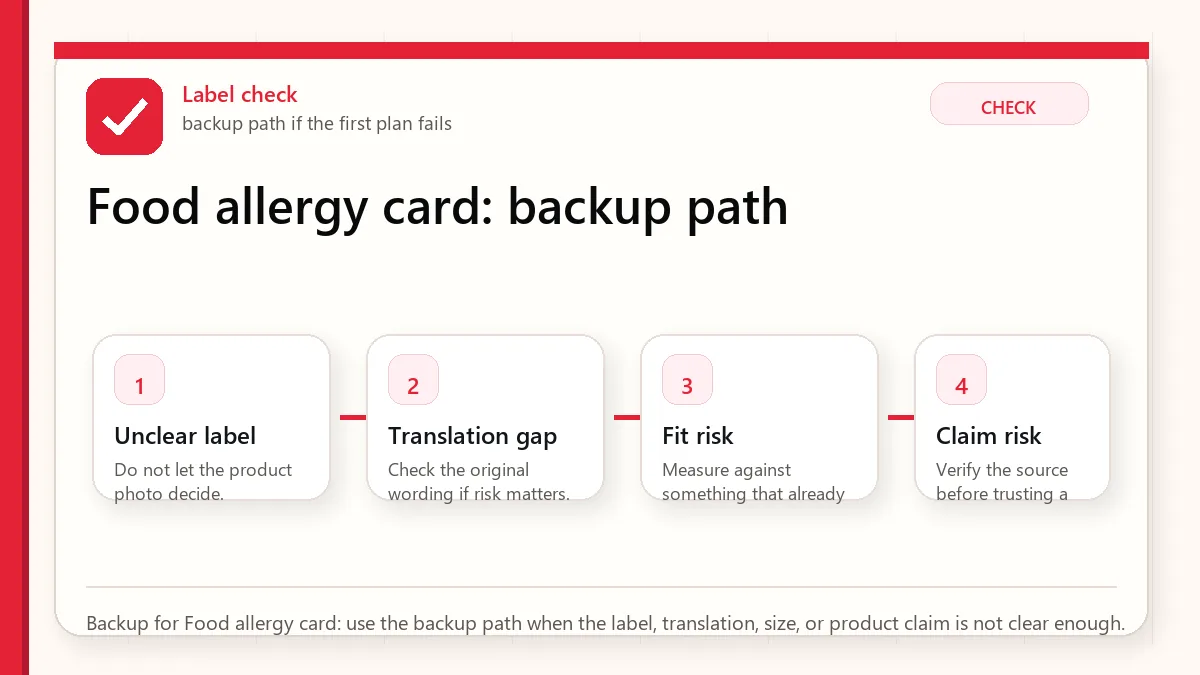
For convenience-store meals and packaged snacks, ask a different question: can you read the label well enough to decide? Look for the ingredient list, allergen notice, manufacturing facility note, expiration date, and heating instructions. A product can look simple from the front package but still contain milk, wheat, soy, sesame, seafood extract, or nut traces.
Use a translation app for the label, but do not let the camera translation be the only check for a serious allergy. Small Korean text, line breaks, and packaging glare can make machine translation miss important words.
What to do when staff cannot confirm
The safest response is not to negotiate. Thank the staff and choose a lower-risk option. A restaurant that cannot verify sauce, broth, or cross-contact may still be a good restaurant; it is just not a good choice for your allergy risk that day.
- Choose plain packaged food with a readable label over an unclear mixed dish.
- Choose a restaurant with simpler preparation if cross-contact matters.
- Carry safe snacks for late-night or travel days.
- Keep emergency medication and instructions accessible according to your medical plan.
Official and safety links
- Korea MFDS food labeling system: Official background on Korea food labeling and allergen warning context.
- Korea MFDS English site: Use for current food and safety information.
- VISITKOREA emergency situations: Traveler emergency reference.
- VISITKOREA 1330 travel helpline: Traveler assistance and interpretation support reference.
Related guides
- Korean food allergies guide
- Korean convenience store food labels
- Korean BBQ costs and allergy questions
- Translation apps in Korea
FAQ
Is a translation app enough for food allergies in Korea?
No. A translation app can help, but a prepared allergy card is clearer and gives staff time to check hidden ingredients and cross-contact risk.
Should I ask if a dish is safe?
Ask staff to check specific ingredients, sauce, broth, oil, and shared tools. If they cannot confirm, choose another option.
What emergency number should travelers know in Korea?
119 is Korea's emergency number. Follow your doctor's travel plan for medication and emergency care.