Start with the moment you order
Korean BBQ feels easier when you understand the table system before the meat arrives: portions are shared, side dishes are part of the meal, staff may help with the grill, and ordering too much is easy.
Last checked: June 1, 2026. Re-check the latest product label, restaurant information, and official/public database before acting, because routes, prices, labels, rules, app screens, eligibility, and store/service policies can change.
Last updated: May 23, 2026. Rules, app flows, prices, and eligibility can change, so re-check official sources close to your trip.
Where food plans usually get uncertain
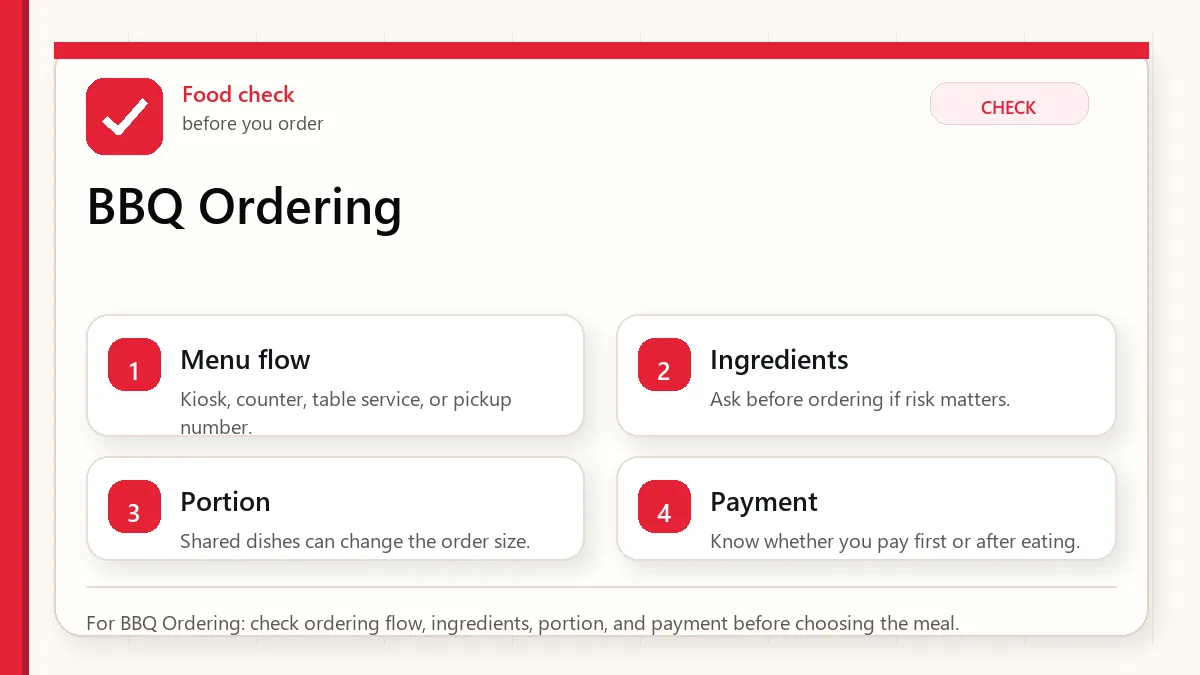
This matters when the menu photo is easy but the real problem is ordering flow, hidden ingredients, spice level, shared table rhythm, payment, or whether staff can confirm a question clearly. Choose the situation as carefully as the dish.
What to check before you rely on it
- Start with modest portions and add more if needed.
- Notice whether staff expects to handle the grill or guests do.
- Use side dishes as part of the meal, not as separate appetizers.
- Check whether payment is per table, at counter, or split-friendly before assuming.
- Save the relevant page or screenshot before you need it in public.
- Re-check volatile details near travel day because policies and app flows change.
Korean BBQ is a shared system, not just grilled meat
Portions are easier to add than undo
First-time groups often order too much because every cut sounds important. Start with a reasonable amount, watch the table rhythm, and add more after you understand appetite and cooking speed.
The grill has social rules
Some restaurants expect staff to cut and turn meat; others let guests handle it. Watch the first few minutes and follow the restaurant’s pattern instead of grabbing tools immediately.
Side dishes are functional
Banchan, lettuce, garlic, sauces, and wraps balance richness and spice. They are not only decoration, and some can often be refilled depending on the restaurant.
An ordering path that keeps the meal manageable
Decide what needs to be clear before ordering
Decide what must be clear before ordering: ingredient risk, spice, portion, staff help, payment, or pickup flow.
Use reliable sources when ingredients, safety, or store rules matter
For allergy, food safety, opening hours, and store rules, use the most current source you can verify and keep uncertainty visible.
Keep a simple meal or staffed counter as the fallback
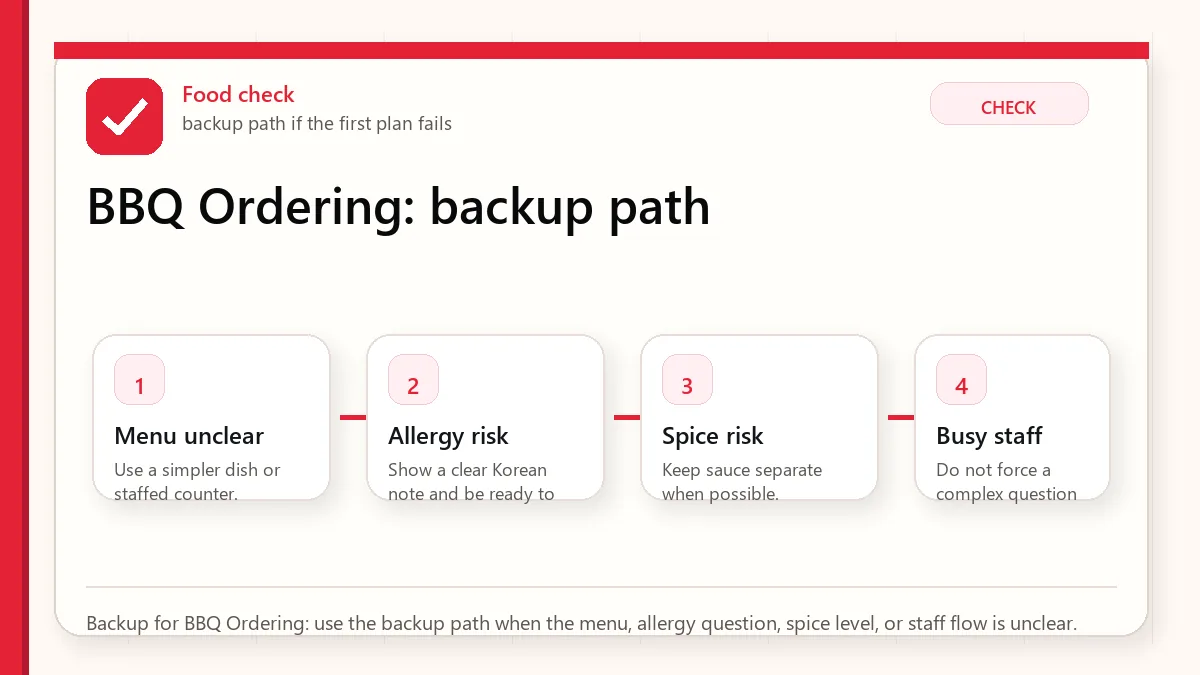
The backup should be easy to explain: a Korean allergy note, a mild dish, a staffed restaurant, or a convenience-store fallback.
Do not force a busy food situation to solve every question
More menu options can increase uncertainty. Choose the situation where staff, ingredients, and payment are easiest to understand.
The small check that changes the answer
The first plan depends on one fragile detail
If one card, one app login, one translation scan, or one store policy controls the whole plan, add a backup before the trip.
The information is technically correct but not practical
A rule can be true and still be hard to use when you are tired, carrying luggage, or standing in a busy line. Plan for the human moment, not only the policy.
A visitor copies advice from a different travel style
A resident, Korean speaker, business traveler, or frequent visitor may solve problems differently from a first-time tourist. Use advice that matches your situation.
What this means in the real moment
| Situation | Safer default | Why |
|---|---|---|
| Short first trip | Choose convenience and fewer moving parts | Recovery time is limited |
| Budget-conscious trip | Separate must-pay costs from nice-to-have extras | Small purchases add up quickly |
| Higher-risk situation | Use official sources and conservative backups | Health, entry, tax, and payment issues are not good places to gamble |
Sources to re-check
Use these pages for facts that can change by date, operator, airport, app version, store, or traveler status.
Where to go next
FAQ
Can I rely on one answer for every visitor?
No. Korea travel details can depend on nationality, app version, store, airport, phone setup, card issuer, and date.
Should I solve this after arriving?
Try not to. Anything involving entry, phone data, maps, payment, allergies, or airport transfer is easier to prepare before the first pressure moment.
What is the safest habit?
Keep the official source, the practical guide, and a simple backup together. That combination is more useful than memorizing many tips.