Taxi fares are city-specific. In Seoul, the official daytime base fare for a regular sedan taxi is ₩4,800 for the first 1.6 km; the meter then adds distance or low-speed time charges, and a higher late-night rate applies from 10 PM to 4 AM. Check the city, taxi class, pickup time, tolls, and receipt instead of applying the Seoul figure to every ride in Korea.
Last checked: September 1, 2026. The Seoul fare table cited below labels these sedan rates as effective from February 1, 2023. Recheck the official city table before travel because local fares and app fees can change.
Start with the city, taxi class, and pickup time
The table on this page uses Seoul’s regular sedan-taxi rules because that is the most common reference for visitors staying in Seoul. Deluxe, large, brand, international, airport section-fare, and taxis in other cities can use different rates, so identify the service before comparing a receipt with the table.
- Seoul Metropolitan Government – taxi types and rates
- Seoul Metropolitan Government – getting to Seoul from Incheon Airport
- Seoul Metropolitan Government – 2026 receipt and complaint update
How Seoul’s regular sedan meter is calculated
| Pickup time | Base fare | Distance increment | Low-speed time increment |
|---|---|---|---|
| 4 AM–10 PM | ₩4,800 up to 1.6 km | ₩100 per 131 m | ₩100 per 30 seconds |
| 10 PM–11 PM | ₩5,800 up to 1.6 km | ₩120 per 131 m | ₩120 per 30 seconds |
| 11 PM–2 AM | ₩6,700 up to 1.6 km | ₩140 per 131 m | ₩140 per 30 seconds |
| 2 AM–4 AM | ₩5,800 up to 1.6 km | ₩120 per 131 m | ₩120 per 30 seconds |
The official Seoul table says distance and time are partially calculated together below 15.72 km/h and lists a 20% outside-city surcharge. These figures do not describe every taxi class or app product, and a toll can appear separately from the metered fare.
Estimate an airport ride without inventing one flat price
For an airport ride, record the terminal, exact hotel district, pickup time, taxi class, expected toll, luggage needs, and whether the service quotes a meter or an approved section fare. Compare that live result with the official airport transport page. A train or airport bus may be easier to budget when road traffic is the main uncertainty.
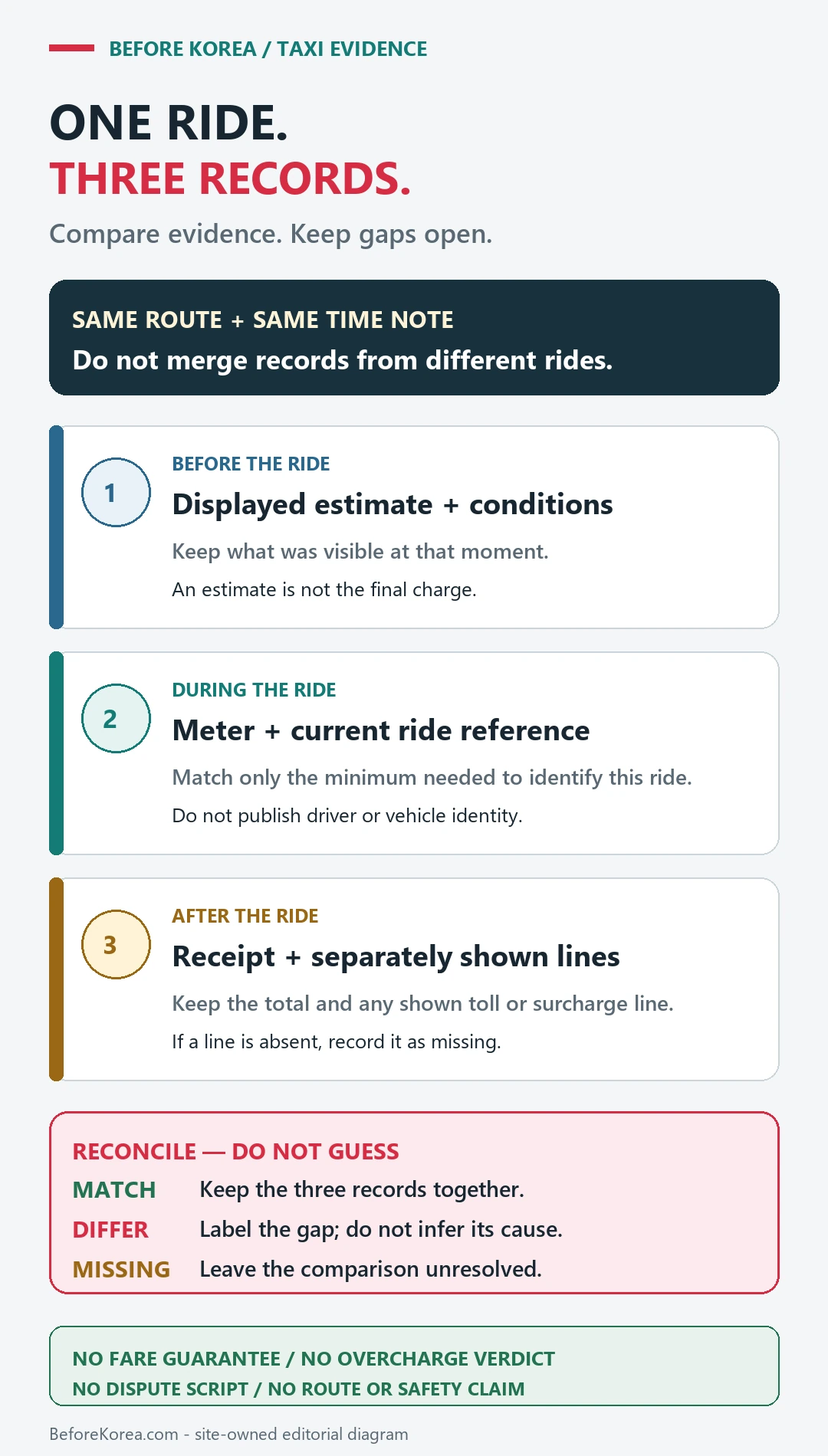
- Before the ride: save the displayed estimate, taxi class, pickup time, and whether tolls are included.
- During the ride: check that the meter is operating for a metered trip and keep the route visible.
- After the ride: retain the receipt and separate the meter fare, toll, surcharge, and any clearly disclosed call fee.
Separate the estimate, meter, toll, and receipt
| Record | What to check | What it does not prove |
|---|---|---|
| Pre-ride estimate | Vehicle type, pickup time, disclosed call fee, and whether toll is shown separately. | The exact final meter amount or successful dispatch. |
| Taxi meter | That it runs for a metered ride and shows the applicable surcharge state. | Whether a separately charged toll is already included. |
| Toll line | The road toll shown separately in the app or receipt. | That every difference from the estimate is an overcharge. |
| Final receipt | Boarding and arrival time, fare, surcharge, toll, and full vehicle number. | The cause of a mismatch without the estimate and route record. |
Seoul’s January 2026 update says improved receipts identify fare and surcharge information in English and that participating apps distinguish “meter fare” from “toll fee.” Preserve all records for the same ride before deciding why two amounts differ.
If the final charge is still unclear
First compare the pickup time, taxi class, meter, late-night or outside-city surcharge, toll, route change, and any disclosed app call fee. Keep the estimate, receipt, route, time, and full license plate together rather than relying on one screenshot.
For a Seoul taxi, the city publishes an in-taxi multilingual QR complaint route and the 120 Dasan Call Center at 02-120. Use the current official taxi page for contact details and the platform’s own support path for an app record. A difference should remain unresolved until those records identify its cause.