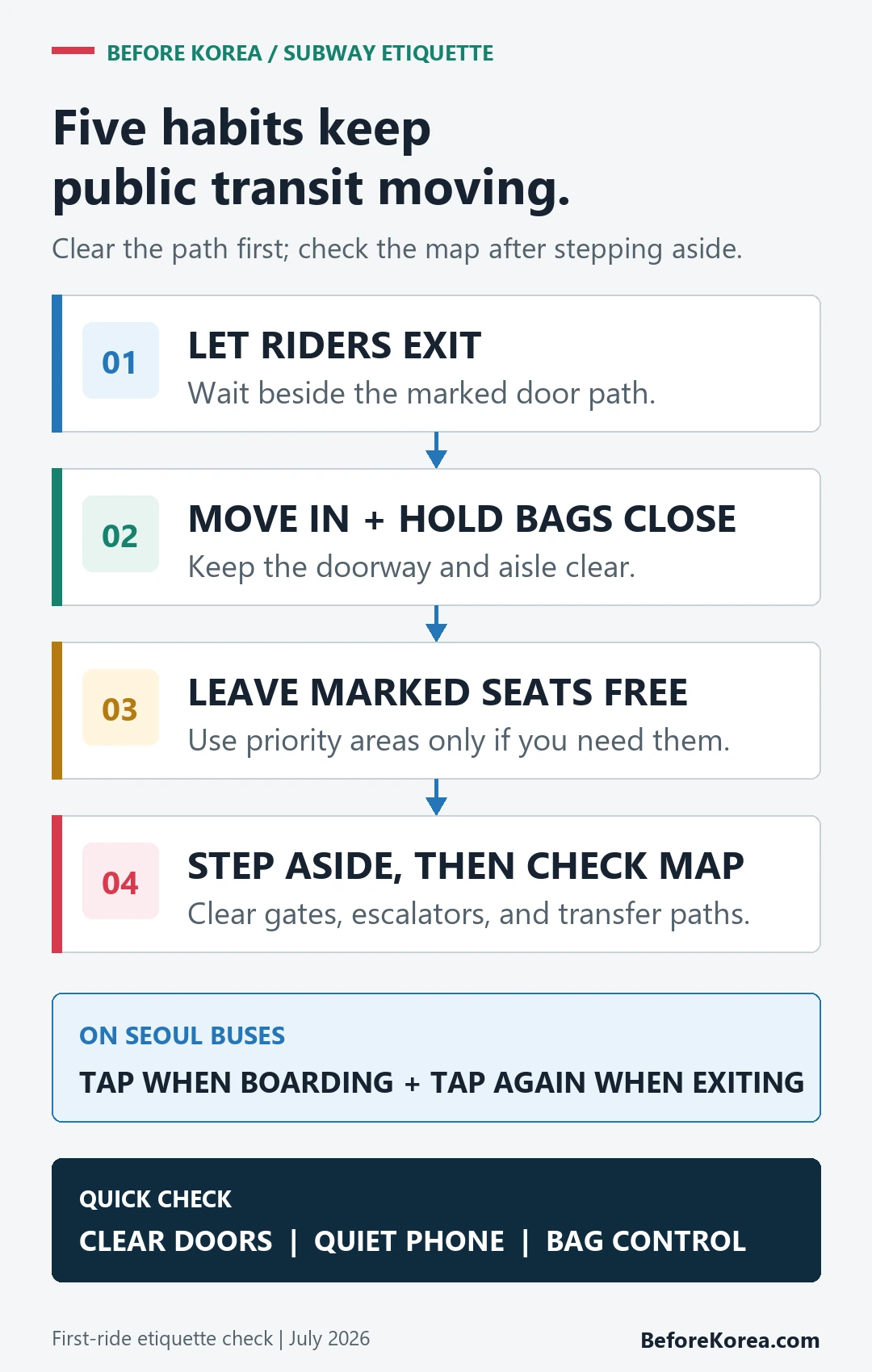
Korea subway etiquette is not complicated, but it is easy to feel clumsy on your first ride. Stations are large, cars can be crowded, transfers may involve long walks, and everyone around you seems to know exactly where to stand. The tourist version is simple: keep the flow moving, keep sound low, manage your bag, and treat priority areas seriously.
Last checked: July 22, 2026. Re-check the official operator, app, fare, or route page before acting, because routes, prices, labels, rules, app screens, eligibility, and store/service policies can change.
Start with the route you will actually take
Stand to the side of the train doors, let people exit first, line up where platform markings indicate, avoid long phone calls, keep backpacks in front or low when crowded, and do not sit in priority seats unless you genuinely need them. On buses, tap your transportation card when boarding and again when getting off if you want transfer discounts to work properly.
Subway behavior visitors should know
| Situation | What to do | What to avoid |
|---|---|---|
| Platform doors | Wait beside the door path. | Standing directly in front of exiting passengers. |
| Inside the train | Move inward when space opens. | Stopping at the doorway with luggage. |
| Phone use | Text, map, or use quiet audio. | Long speakerphone calls or loud video sound. |
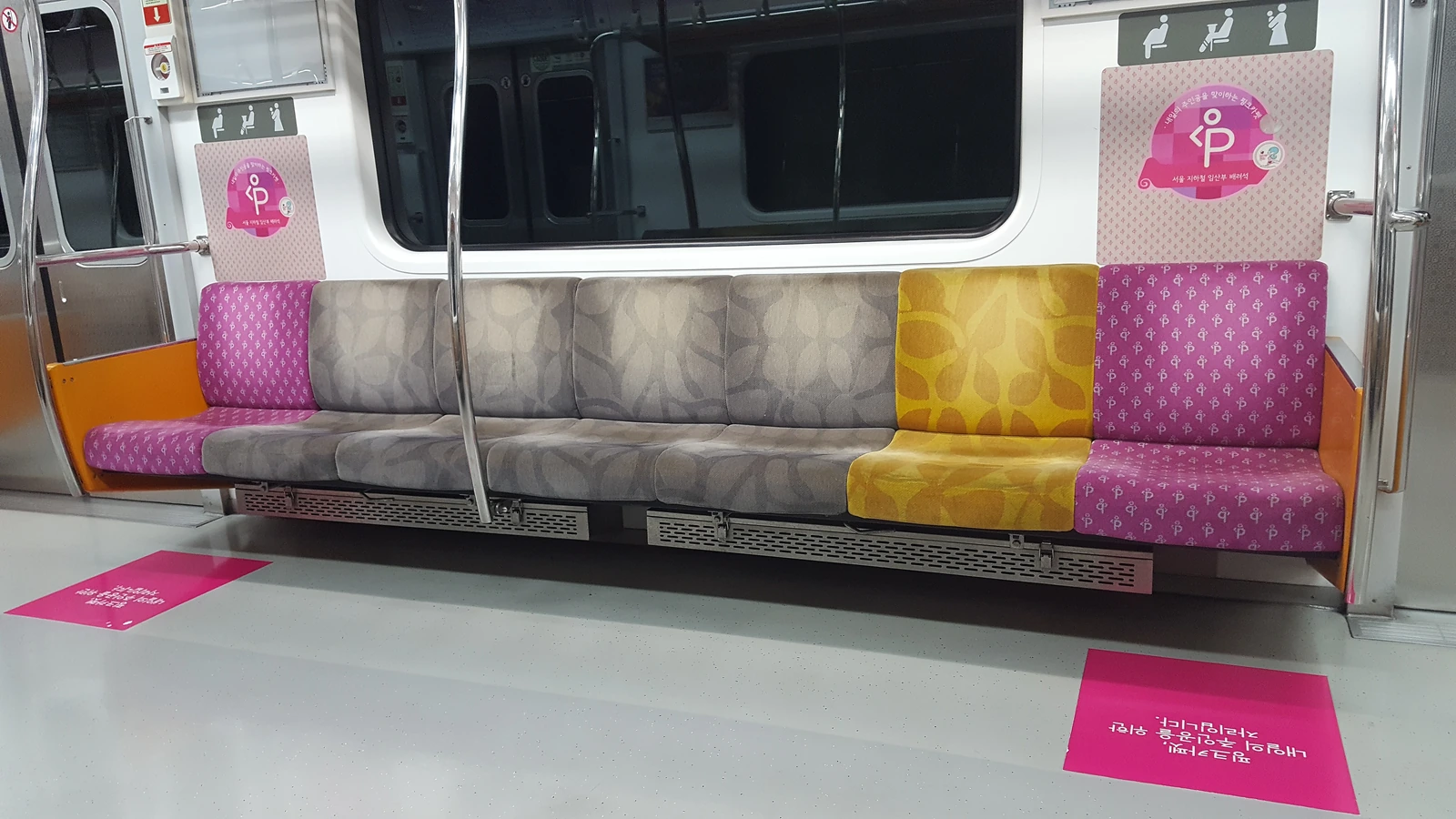
| Priority seats | Leave them for elderly, pregnant, injured, or disabled riders. | Using them as empty tourist seats. |
| Luggage | Hold it close, use elevators when needed. | Dragging bags across feet or blocking stairs. |
Priority seats and pregnant women seats
Korean subway cars usually have priority seating areas for elderly, disabled, pregnant, injured, or otherwise mobility-limited passengers. Some cars also have marked pregnant women seats. Tourists should be conservative here. Even if the train is not full, do not treat these seats as normal open seating unless you personally need them. If you accidentally sit there, stand up calmly when you notice.

Luggage etiquette
Luggage is not rude by itself. It becomes a problem when it blocks doors, stairs, escalator landings, or narrow transfer paths. If you arrive with large suitcases, avoid rush hours when possible and consider airport buses, taxis, luggage delivery, or a route with fewer transfers. Inside a train, keep bags close to your body and do not let them roll into other passengers.
Bus etiquette and tapping out
On many Seoul buses, you board near the front and exit near the rear. Tap your transit card when boarding. Tap again when getting off, especially if you are transferring. This matters for fare calculation and transfer recognition. Press the stop bell before your stop, prepare to move toward the exit, and avoid standing in the stairwell or doorway until you need to leave.
Food, drinks, and smell
The subway is not the place for a full meal. A sealed water bottle is usually fine, but open food, strong smells, and spill-risk drinks are inconsiderate in crowded transit. Seoul has also published rules about items that can be refused on city buses, especially uncovered takeout drinks or foods that may spill or smell. When in doubt, finish it before boarding.
Escalators, stairs, and station flow
Station movement can be fast. Do not stop at the top or bottom of escalators to check your map. Step aside first. If you need an elevator, follow signs early rather than trying to force a suitcase through stairs at the last moment. Some escalator walking norms are changing for safety, so the safest tourist habit is to stand carefully, hold the handrail, and avoid rushing around people.
Rush hour changes the rules
During quiet hours, tourists have more room to look around, check signs, and learn the system. During rush hour, the social expectation changes: move with the flow and reduce friction. Avoid standing in the middle of transfer corridors, do not stop immediately after gates, and keep bags tight against your body. If you have a large suitcase, a route that is fine at 2 p.m. can be miserable at 8:30 a.m.
Families and groups should agree on a station exit before boarding. If someone gets separated, do not block the train door trying to regroup. Get off at the next station or meet at a clear exit. Seoul stations can have many exits, and the wrong exit can add steep stairs or a long walk.
How to use transit without looking lost
Save your destination, exit number, and transfer station before entering the busiest part of the station. Hold your card or phone ready before the gate. If a gate rejects your card, step out of the line and solve it at a machine or counter. This keeps everyone behind you moving and gives you room to think.
Official links to check
Use these official links when the next step matters. This guide explains what to watch for, but app downloads, eligibility, prices, routes, policies, and service rules can change.
- T-money official site: Check current card, top-up, refund, and mobile T-money information.
FAQ
Can tourists sit in Korea subway priority seats?
If you genuinely need the seat, yes. If you do not, avoid it even when it is empty.
Do I need to tap out on Korean buses?
Yes, make it a habit. Tapping out helps transfer discounts and proper fare handling.
Is luggage allowed on the Seoul subway?
Yes, but plan routes carefully and avoid peak commute hours if you have large bags.
Related Before Korea guides
- Korea subway and bus guide
- T-money Card in Korea
- Korea travel apps
- Naver Map in Korea
- Incheon Airport to Seoul