The best time to visit Korea depends on what kind of trip you want. Spring and autumn are the easiest seasons for first-time visitors, but they are also popular and can be more expensive. Summer is lively but humid and rainy. Winter is cold, dry, and often clearer, with strong wind-chill in Seoul and milder conditions in southern areas such as Busan and Jeju.
Last checked: June 1, 2026. Re-check the official provider, safety, weather, or service page before acting, because routes, prices, labels, rules, app screens, eligibility, and store/service policies can change.
Last updated: May 24, 2026.
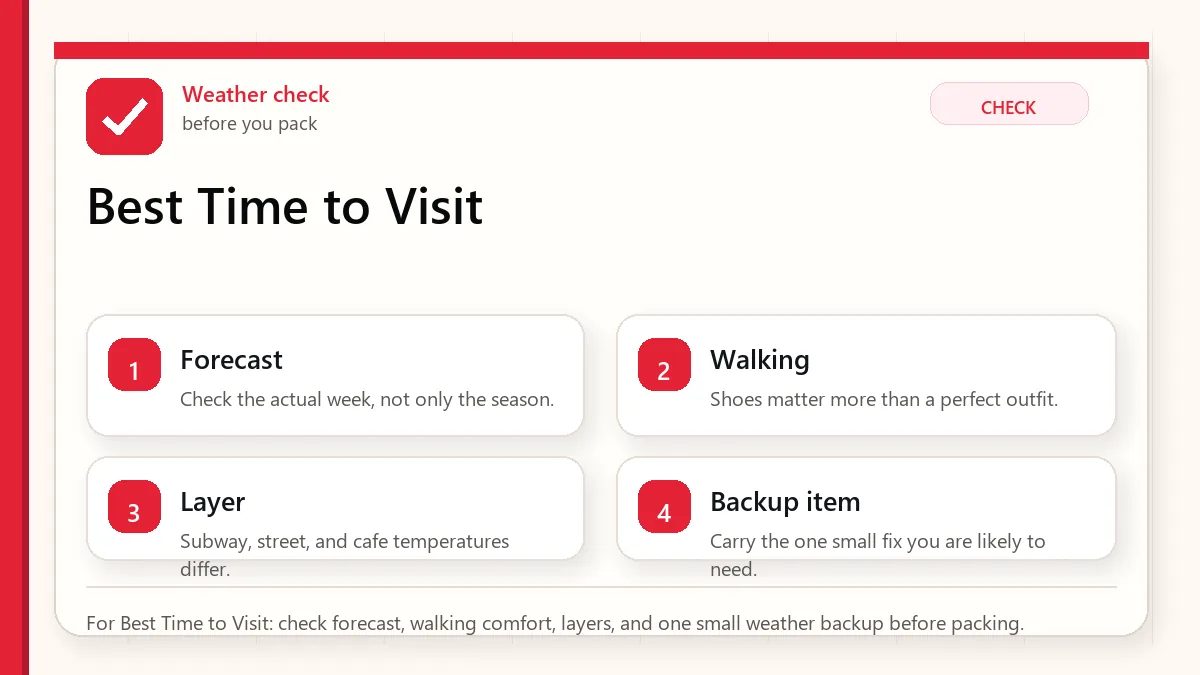
Start with the week you will actually be there
For comfortable first-time travel, choose April to May or late September to early November. For cherry blossoms, expect a short and weather-dependent window around late March to early April in many major areas, varying by region and year. For autumn foliage, late October to early November is often attractive, but timing changes by mountain, city, and weather. Avoid assuming that one perfect week is guaranteed.
Korea weather by month
| Month | Travel feel | Watch out for |
|---|---|---|
| January-February | Cold, dry, winter scenery. | Wind chill, icy streets, short daylight. |
| March | Transition month, early spring. | Temperature swings and dust. |
| April | Popular spring travel. | Blossom crowds and higher prices. |
| May | Comfortable warm weather. | Busy weekends and outdoor crowds. |
| June | Warmer, humid start. | Rain increasing toward summer. |
| July-August | Hot, humid, rainy or stormy periods. | Heavy rain, heat fatigue, slippery transit. |
| September | Late-summer to early-autumn transition. | Heat can linger early in the month. |
| October | One of the most comfortable months. | Foliage demand and hotel pricing. |
| November | Cool, crisp, late foliage in places. | Cold evenings and shorter days. |
| December | Winter lights, shopping, cold weather. | Dry air and wind. |
Spring: beautiful, crowded, fragile
Spring is popular because temperatures become comfortable and blossoms make cities feel special. The catch is that bloom timing is short and weather-sensitive. Rain, wind, or a warm spell can shift the best days quickly. If blossoms matter, build flexibility into the itinerary and avoid making your entire trip depend on one park on one afternoon.
Summer: not impossible, but humid
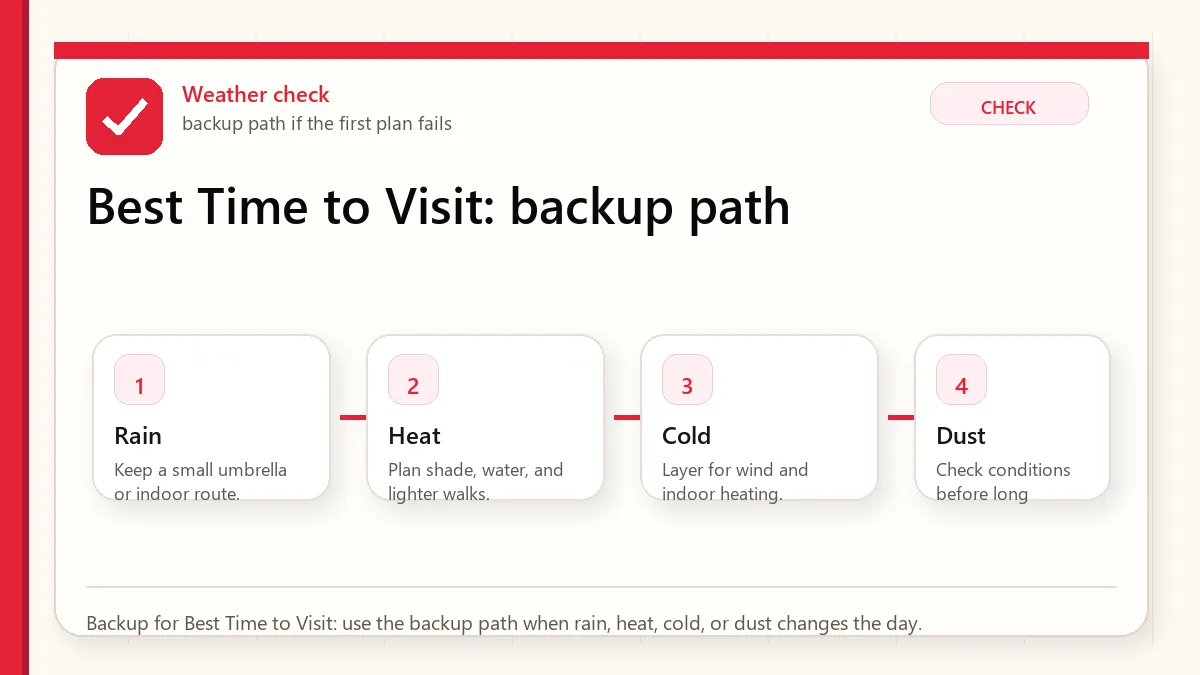
Summer in Korea can be fun for festivals, nightlife, beaches, and long evenings, but first-time visitors should respect humidity. The rainy season can bring heavy downpours, and August can feel physically draining. Pack quick-dry clothes, shoes with grip, and a lighter schedule with indoor backups such as museums, malls, cafes, and food halls.
Autumn: the easiest season for many visitors
Autumn often gives Korea its best travel balance: cooler air, clearer skies, comfortable walking, and foliage in parks, palaces, and mountains. October can be excellent, but it is not secret. Book accommodation early for popular weeks, and remember that mountain foliage often peaks earlier than city trees.
Winter: cold but manageable
Winter can be a good choice if you like clear air, lower crowds in some tourist areas, ski trips, winter lights, shopping, and cafe culture. Seoul can feel much colder than the thermometer suggests because of wind. Pack thermal layers, gloves, warm socks, moisturizer, and shoes with grip. Jeju and Busan are milder, but coastal wind still matters.
Do not chase one perfect date
Many visitors plan Korea around cherry blossoms or autumn foliage, then feel stressed because nature does not follow flight bookings. A better strategy is to choose a strong general window and build several possible viewing points into the route. If blossoms peak early in Seoul, Busan, Jeju, or a later-blooming mountain area may still change the plan. If foliage is late, palace gardens and city parks can still provide color after mountain peaks have passed.
Weather also affects mood more than photos suggest. A slightly less famous month with comfortable walking can create a better trip than a famous week packed with crowds, high prices, and rain risk.
Regional differences matter
Seoul is colder in winter and can feel harsher because of wind and urban walking. Busan is milder but still windy near the coast. Jeju is warmer than mainland Korea but weather can change quickly and wind can be strong. Do not pack only for the city where you land if your itinerary includes mountains, coast, or island travel.
Official links to check
Use these official links when the next step matters. This guide explains what to watch for, but app downloads, eligibility, prices, routes, policies, and service rules can change.
- Korea Meteorological Administration English site: Check official Korean weather forecasts close to departure.
- AirKorea English site: Check air-quality and fine-dust conditions before outdoor-heavy days.
- VISITKOREA official travel site: Use this for current tourism notices, transport basics, and traveler support.
FAQ
What is the best month to visit Korea?
April, May, October, and early November are strong choices for many first-time visitors.
When is Korea rainy season?
Rain risk usually rises in summer, especially around late June and July, but exact timing varies by year.
Is winter a bad time to visit Korea?
No. It is cold, but it can be clear, atmospheric, and manageable with proper layers.