Start with the account or access block
Translation apps are strongest when you use them as support, not as authority. In Korea, Papago can be especially useful for Korean text and local phrasing, while Google Translate can still help as a second check. Use both for high-risk moments like allergies, clinics, addresses, or payment problems.
Last checked: June 1, 2026. Re-check the official or primary source page before acting, because routes, prices, labels, rules, app screens, eligibility, and store/service policies can change.
Last updated: May 23, 2026. Rules, app flows, prices, and eligibility can change, so re-check official sources close to your trip.
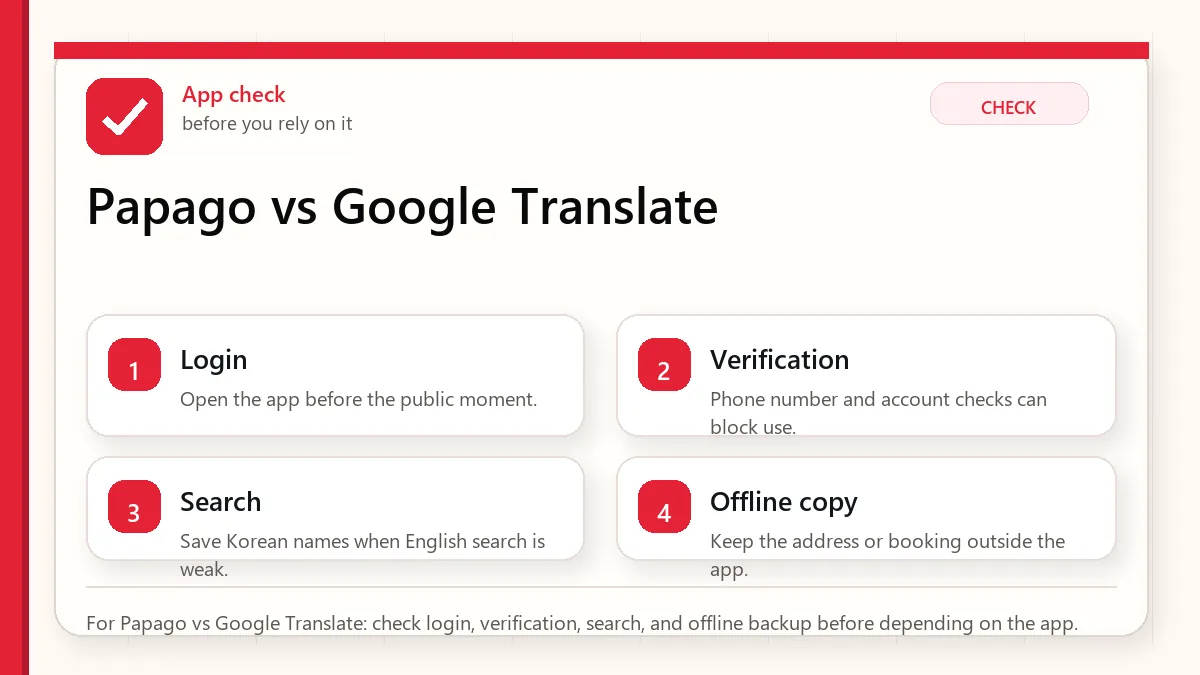
Where visitors usually feel unsure
This matters when the rule is less important than the local rhythm: queue, noise, seat, shared table, greeting, payment, or how quickly people expect the line to move. Pause, read the room, and use the smallest polite action that solves the moment.
The backup that keeps the problem small
- Install both Papago and Google Translate if language risk affects food, addresses, or app troubleshooting.
- Save important Korean phrases before you need them.
- For allergies, use a prepared written note instead of relying on one live camera scan.
- Copy Korean place names from maps or official listings when possible.
- Save the relevant page or screenshot before you need it in public.
- Re-check volatile details near travel day because policies and app flows change.
Translation is a support tool, not a promise
Papago often feels stronger with Korean context
Because Papago is built around Korean-language usage, it can be especially helpful for Korean signs, phrases, and natural wording. That does not mean every result is safe for medical or allergy decisions.
Google Translate is useful as a second opinion
Google’s camera translation and broad language support can help when Papago misses context or when you need to move between more than Korean and English. Comparing both can reveal uncertainty.
The best translation is sometimes a saved phrase
For addresses, allergies, hotel requests, and taxi destinations, prepared Korean text is calmer than live translation under pressure.
A calmer way to handle the social moment
Notice the setting before choosing the action
Notice the setting first: queue, seat, noise level, shared space, or staff rhythm. The smaller polite action is usually the safer one.
Use official guidance only where rules, safety, or transport signs apply
For signs, transport rules, and venue instructions, follow the posted rule first. For softer manners, read the local flow.
Use a short polite phrase if the moment feels unclear
The backup is a small repair: pause, step aside, say a short apology, or ask with a simple phrase.
Do not overexplain when a small adjustment is enough
More rules can make you stiff. Watch the room, keep space, and adjust quietly.
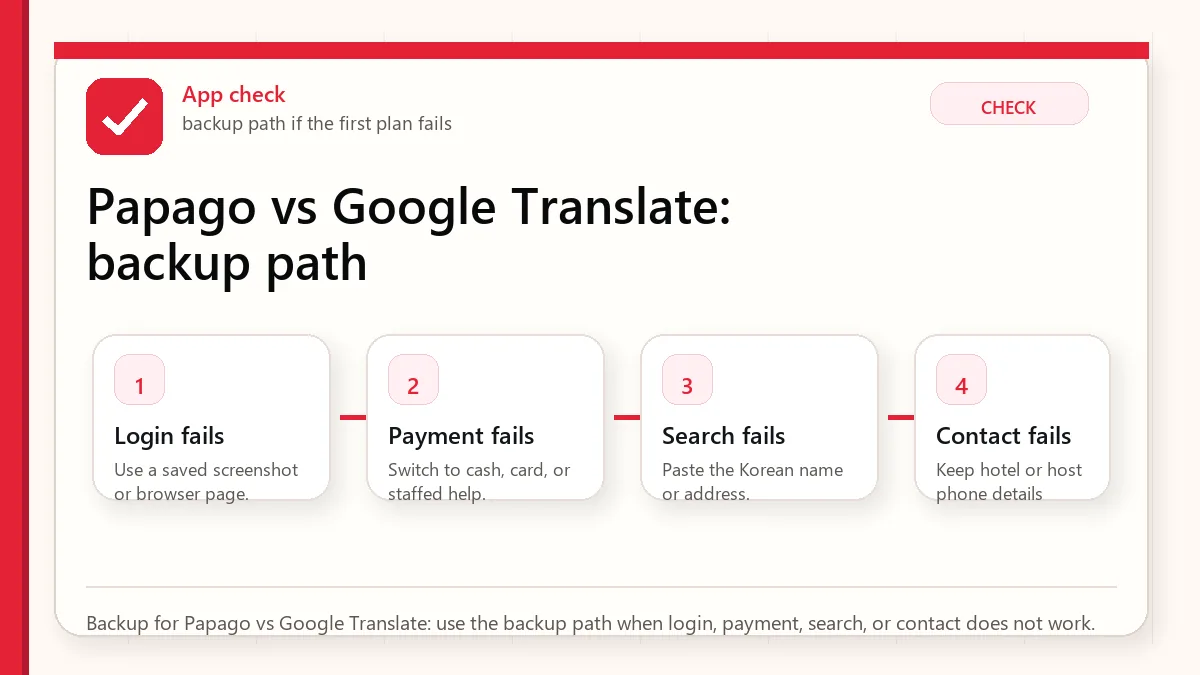
What to verify before you go
The first plan depends on one fragile detail
If one card, one app login, one translation scan, or one store policy controls the whole plan, add a backup before the trip.
The information is technically correct but not practical
A rule can be true and still be hard to use when you are tired, carrying luggage, or standing in a busy line. Plan for the human moment, not only the policy.
A visitor copies advice from a different travel style
A resident, Korean speaker, business traveler, or frequent visitor may solve problems differently from a first-time tourist. Use advice that matches your situation.
What to check before you rely on it
| Situation | Safer default | Why |
|---|---|---|
| Short first trip | Choose convenience and fewer moving parts | Recovery time is limited |
| Budget-conscious trip | Separate must-pay costs from nice-to-have extras | Small purchases add up quickly |
| Higher-risk situation | Use official sources and conservative backups | Health, entry, tax, and payment issues are not good places to gamble |
Sources to re-check
Use these pages for facts that can change by date, operator, airport, app version, store, or traveler status.
- NAVER Papago official site
- Korea Tourism food translation reference
- NAVER official press release on NAVER Map guide for foreign visitors
Where to go next
Official links to check
Use these official links when the next step matters. This guide explains what to watch for, but app downloads, eligibility, prices, routes, policies, and service rules can change.
- NAVER Papago web translator: Use Papago to test Korean phrases, menus, labels, and short messages.
- NAVER Papago on Google Play: Download the Android app from Google Play.
- NAVER Papago on the App Store: Download the iPhone app from the App Store.
- Google Translate web: Use Google Translate as a second translation check.
- Google Translate on Google Play: Download the Android app from Google Play.
- Google Translate on the App Store: Download the iPhone app from the App Store.
FAQ
Can I rely on one answer for every visitor?
No. Korea travel details can depend on nationality, app version, store, airport, phone setup, card issuer, and date.
Should I solve this after arriving?
Try not to. Anything involving entry, phone data, maps, payment, allergies, or airport transfer is easier to prepare before the first pressure moment.
What is the safest habit?
Keep the official source, the practical guide, and a simple backup together. That combination is more useful than memorizing many tips.