You do not need fluent Korean for a good trip. You need a small set of phrases that reduce friction at exactly the right moments: greeting staff, ordering food, asking for help, paying, showing a taxi destination, explaining an allergy, and recovering when you bump into someone or make a small mistake.
Last checked: June 1, 2026. Re-check the official operator, app, fare, or route page before acting, because routes, prices, labels, rules, app screens, eligibility, and store/service policies can change.
Last updated: May 24, 2026.
Start with the pickup and payment fallback
Start with annyeonghaseyo for hello, gamsahamnida for thank you, joesonghamnida for sorry, and juseyo for please give me. These four tools cover a surprising amount of tourist life. Use them with a calm voice, a small nod, and your phone ready for anything complicated.
Core phrases
| Korean | Romanization | Use |
|---|---|---|
| 안녕하세요 | annyeonghaseyo | Hello, general polite greeting. |
| 감사합니다 | gamsahamnida | Thank you. |
| 죄송합니다 | joesonghamnida | Sorry, excuse me after a mistake. |
| 실례합니다 | sillyehamnida | Excuse me, when passing or asking attention politely. |
| 괜찮아요 | gwaenchanayo | It is okay, no problem. |
Restaurant phrases
| Korean | Romanization | Meaning |
|---|---|---|
| 저기요 | jeogiyo | Excuse me, used to call staff. |
| 이거 주세요 | igeo juseyo | This one, please. |
| 물 좀 주세요 | mul jom juseyo | Water, please. |
| 덜 맵게 해주세요 | deol maepge hae juseyo | Please make it less spicy. |
| 포장해 주세요 | pojanghae juseyo | Please make it to go. |
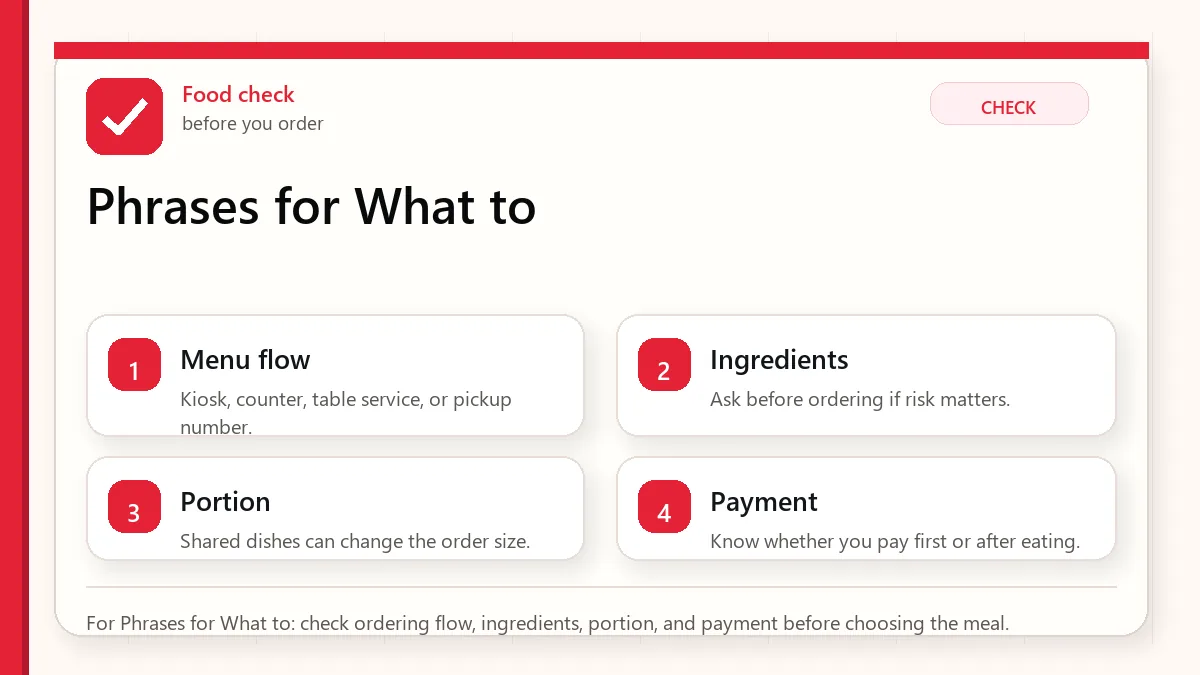
The easiest restaurant pattern is noun plus juseyo. Pointing at a menu photo and saying igeo juseyo is normal. If allergies matter, do not rely only on spoken Korean. Use a prepared allergy card with Korean text and show it before ordering.
Taxi, shopping, and payment phrases
| Korean | Romanization | Use |
|---|---|---|
| 여기로 가 주세요 | yeogiro ga juseyo | Please go here. |
| 카드 돼요? | kadeu dwaeyo? | Do you take card? |
| 영수증 주세요 | yeongsujeung juseyo | Receipt, please. |
| 얼마예요? | eolmayeyo? | How much is it? |
| 괜찮습니다 | gwaenchanseumnida | No thank you, or it is okay. |
Help and emergency phrases
For real emergencies, call the relevant emergency number or ask nearby staff for help. For ordinary travel confusion, short phrases work better than long speeches. Dowajuseyo means please help me. Yeongeo haseyo? asks whether someone speaks English. If the situation is complicated, open your translation app and show a clear sentence.
Pronunciation habits that help
Do not worry about perfect pronunciation. Speak slowly, do not over-stretch vowels, and avoid shouting English words with Korean endings. Many Korean service workers understand context quickly if you point, show the address, or display a photo. The phrase is only one part of communication; the visual cue often does the rest.
Use phrases as keys, not speeches
Tourist Korean works best when it is short. A long translated paragraph can overwhelm a busy cashier or server, especially if the translation app makes the sentence too formal or strange. Use a phrase to open the interaction, then support it with pointing, a photo, a saved address, or a translated note. For example, in a taxi, yeogiro ga juseyo plus a Korean address is stronger than trying to explain the whole route out loud.
For restaurants, learn patterns rather than isolated words. Igeo juseyo means this, please. Mul jom juseyo means water, please. Yeongsujeung juseyo means receipt, please. Once you understand that juseyo turns a thing into a polite request, you can use menus, photos, and gestures with more confidence.
When not to rely on spoken phrases
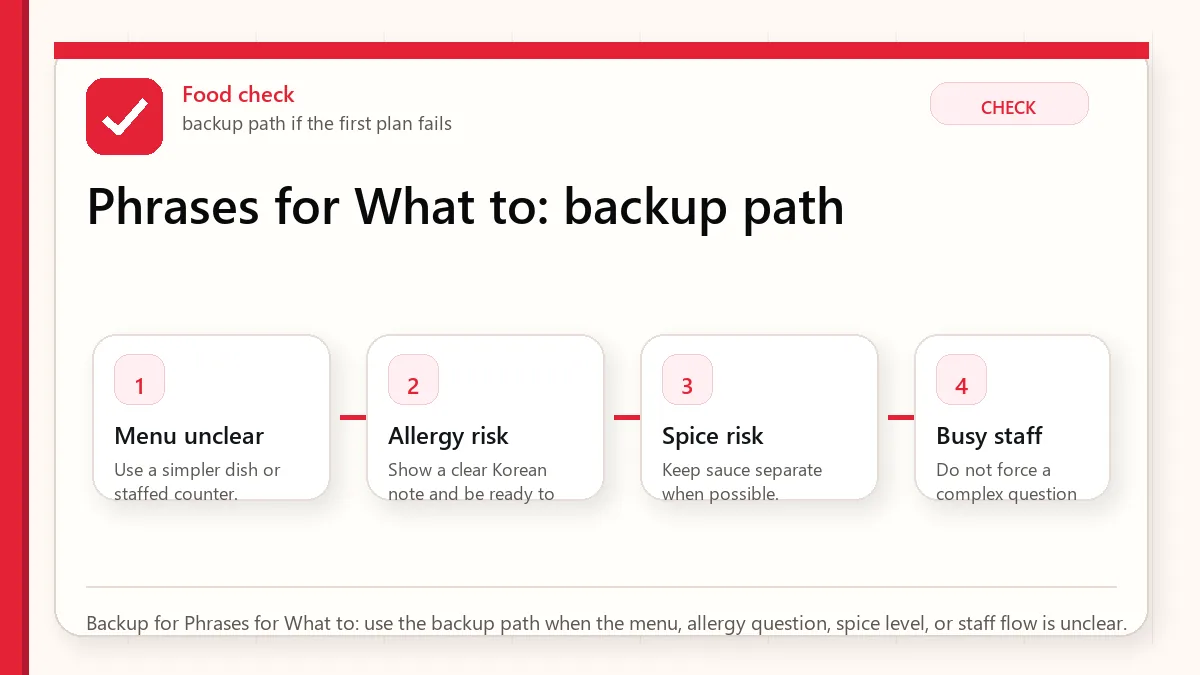
Do not rely only on pronunciation for allergies, medicine, legal issues, hotel addresses, or emergency details. Use written Korean for anything where accuracy matters. Save your hotel address in Hangul. Prepare allergy text before the meal. Keep your passport name and booking name consistent. Phrases are for everyday friction; written text is for precision.
FAQ
Is romanized Korean enough for tourists?
Yes for basic phrases, but save important addresses and allergy text in Hangul too.
Should I learn honorific grammar before visiting Korea?
No. Use standard polite phrases and keep requests simple.
What is the most useful Korean word for tourists?
Juseyo is one of the most useful because it turns menu items, objects, and requests into polite tourist language.
Related Before Korea guides
- Korea translation app guide
- How to order food in Korea
- Korean restaurant kiosk guide
- Korean food allergy guide
- Korea travel apps