Tipping in Korea is one of the easiest rules for tourists to misunderstand. In many countries, tipping is a kindness or a social duty. In Korea, the normal rule is different: pay the listed price and say thank you. Leaving extra cash can confuse staff, make them think you forgot change, or create an awkward moment that neither side wanted.
Last checked: June 1, 2026. Re-check the official operator, app, fare, or route page before acting, because routes, prices, labels, rules, app screens, eligibility, and store/service policies can change.
Last updated: May 24, 2026.
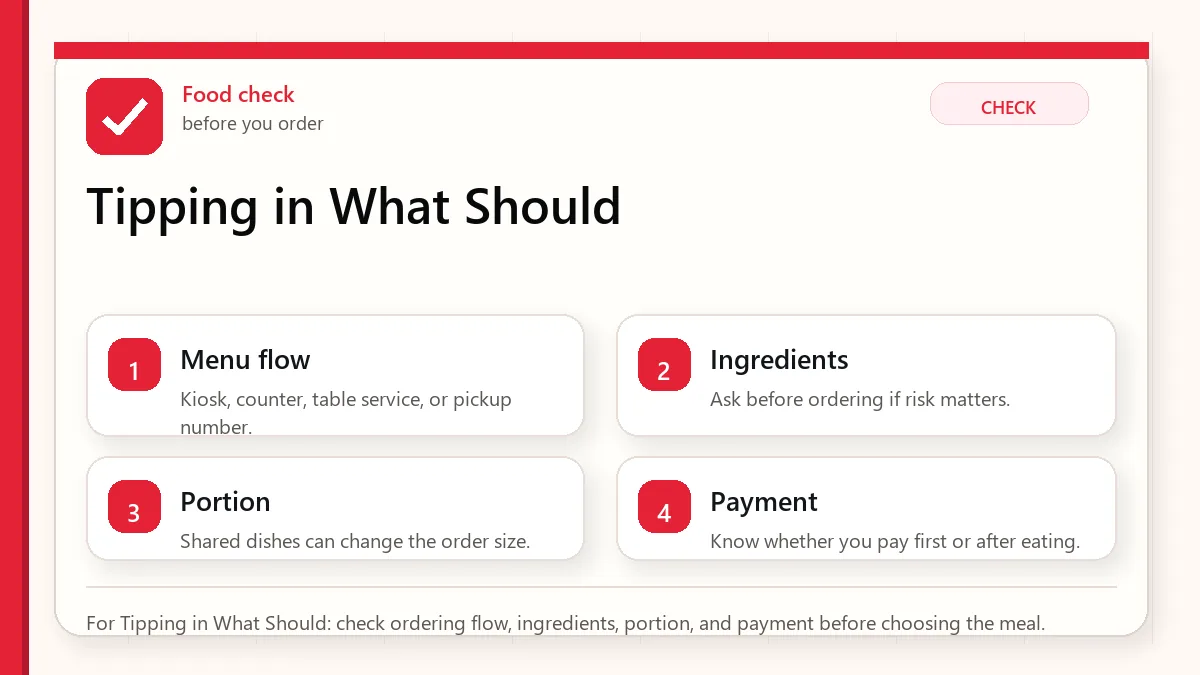
Start with the pickup and payment fallback
You generally do not tip in Korea. Do not tip at ordinary restaurants, cafes, taxis, salons, convenience stores, delivery situations, or casual services. For private tour guides, private drivers, high-end hotel luggage help, or a dedicated private-room server, a small discreet thank-you may be optional, but it should never feel required. If someone refuses, accept the refusal gracefully.
Tipping by situation
| Service | Should tourists tip? | What to do instead |
|---|---|---|
| Standard restaurant | No. | Pay at the counter or kiosk and say thank you. |
| Cafe | No. | Order clearly, return tray if required. |
| Taxi | No. | Pay the fare. Rounding small cash change is optional but not expected. |
| Hotel | Usually no. | Say thank you. Luxury luggage help can be a rare exception. |
| Private guide or driver | Optional in tourist-facing service. | Use an envelope or discreet handover at the end. |
| Salon or spa | No by default. | Pay the listed price. |
Why no tipping feels normal in Korea
Korean service culture is built around clear prices and professional roles. Good service is not treated as a separate add-on that customers must calculate at the end. That does not mean service workers are not appreciated. It means appreciation is usually expressed through polite words, smooth payment, and not creating extra confusion for staff during a busy shift.
What can go wrong if you tip casually
If you leave cash on a restaurant table, staff may chase after you to return it. If you hand loose money to someone who does not expect it, the gesture can feel uncomfortable rather than generous. If a tip jar appears in a tourist-heavy shop, you still should not assume tipping is expected everywhere. The safest visitor rule is simple: no tip unless the setting is clearly a private tourist service where gratuity is explicitly optional.
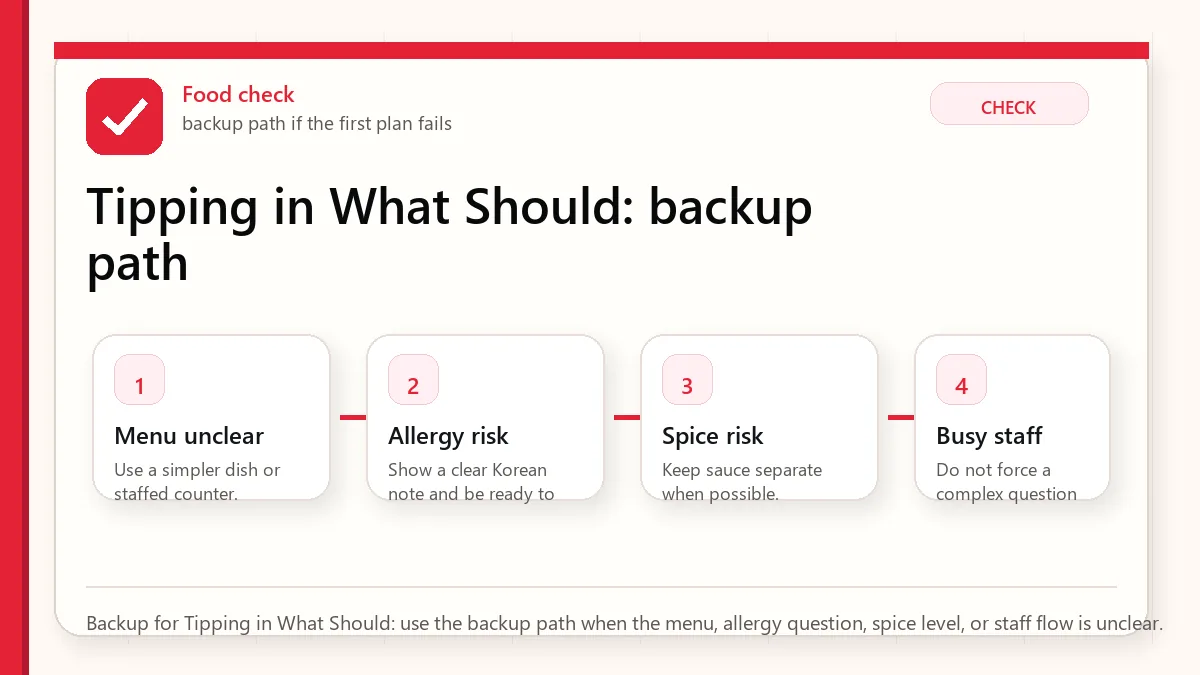
How to show appreciation instead
Use a clear thank you: gamsahamnida. Hand cards, cash, passports, receipts, or small items with two hands when it feels natural. Do not snap fingers, shout aggressively, or wave money. If staff helped you solve a hard problem, a sincere thank you and calm behavior usually mean more than trying to import a tipping ritual.
If you choose to tip a private guide
For a private guide, private driver, or highly personalized tourist-facing service, a small tip can be understood. Present it quietly at the end. A clean envelope is more graceful than loose bills. Use both hands. If the person hesitates or refuses, do not insist. Smile, say thank you, and stop. Pressuring someone to accept a tip makes the gesture about you, not them.
Why tourists feel uncertain
Tipping confusion often comes from mixed travel environments. A hotel may feel international, a tour guide may work mostly with foreigners, a restaurant may look upscale, and a taxi driver may help with luggage. Visitors then wonder whether Korean rules or international tourist rules apply. The safest answer is to start from the Korean baseline: no tip. Then only consider an exception if the service is private, personalized, and clearly outside an ordinary transaction.
This is especially important in restaurants. A nice meal, attentive staff, or extra banchan does not create a tipping obligation. The listed price is the expected price. In fact, trying to force a tip can create more work for staff because they may need to return it or explain that it is not needed.
Private service exceptions
Private guides and drivers are the main gray area because they often operate inside international tourism norms. Even there, tipping should stay optional and discreet. Do not tip at the beginning as if buying better behavior. If you choose to offer something, do it at the end, privately, with a short thank you. A written review, punctuality, and clear communication can be just as valuable.
FAQ
Do you tip in Korean restaurants?
No. Pay the listed price and do not leave cash on the table.
Do taxi drivers in Korea expect tips?
No. Pay the metered or app fare. Small cash rounding can happen, but it is not expected.
What if a Korean worker refuses my tip?
Accept it immediately. Say thank you and do not try to persuade them.
Related Before Korea guides
- Payment in Korea
- Cash, cards, and ATMs in Korea
- How to order food in Korea
- Korean cafe etiquette
- Before You Visit Korea