A Korea budget is easier when you separate fixed costs from small daily leaks: cafes, transit, convenience stores, taxis, beauty shopping, tax-refund temptation, and late-night recovery choices. Plan one realistic daily range, then keep a small cash/card buffer for the moments when the cheaper plan becomes inconvenient.
Check the live price and payment route
Use VISITKOREA currency, exchange, and card information for the current rule or service, then compare the total cost and payment path with the actual itinerary. Card acceptance in one store or app does not predict every online, transit, or small-merchant payment.
- VISITKOREA currency, exchange, and card information
- Korea Customs Service tax refund guidance
- VISITKOREA
- VISITKOREA official tourism portal
- Seoul Climate Card official English page
- Seoul official airport-to-city transport page
Build the budget from the actual itinerary
List accommodation, transport, food, admissions, shopping, cash needs, foreign-card fees, ATM access, and a second payment method kept separately.
- Daily spending categories
- Accepted card and mobile-payment options
- Cash withdrawal or exchange route
- Backup payment method
Korea cafe culture is part of the trip for many visitors, but two drinks, dessert, and a long rest stop can turn into a daily budget line. That is fine if planned; it feels wasteful when it surprises you.
A taxi can be a smart use of money after a late arrival, heavy shopping, rain, or a missed last train. The mistake is not taking a taxi; it is pretending taxis will never happen and then feeling budget guilt when one becomes practical.
Test important payments and keep a separate backup
- Build the daily estimate from the actual bookings and planned routes instead of one national average.
- Check whether each important purchase accepts the foreign card online and in person, including any identity or phone verification.
- Compare card conversion, ATM, exchange, top-up, refund, and deposit fees before loading or withdrawing a large amount.
- Keep a modest cash reserve and a second card or payment route that does not depend on the same bank, phone, or app.
- Review receipts and pending transactions during the trip so a deposit, duplicate charge, or failed refund can be raised promptly.
Fees and failed payments change the real total
A workable Korea budget includes the places where foreign payment can fail and the fees attached to the backup. The cheapest headline rate is not the lowest total when withdrawal, conversion, top-up, or refund costs are added.
| Trip detail | Why it matters |
|---|---|
| Booked cost | Use the real accommodation, route, and ticket price |
| Card acceptance | Online and in-person payment can behave differently |
| Fees and exchange | Include conversion, ATM, top-up, deposit, and refund costs |
| Backup funds | Keep cash and a second payment route separately |
For Korea travel budget, prices, fees, exchange rates, card acceptance, and app verification can change by merchant, account, location, and date.
If a foreign card or online payment is rejected
Check the merchant’s accepted cards, billing details, 3-D Secure or phone verification, and whether the failure is online-only before retrying.
Use the merchant’s official counter, another card, cash, or a documented visitor payment option; do not send card details to an informal helper.
Related guides
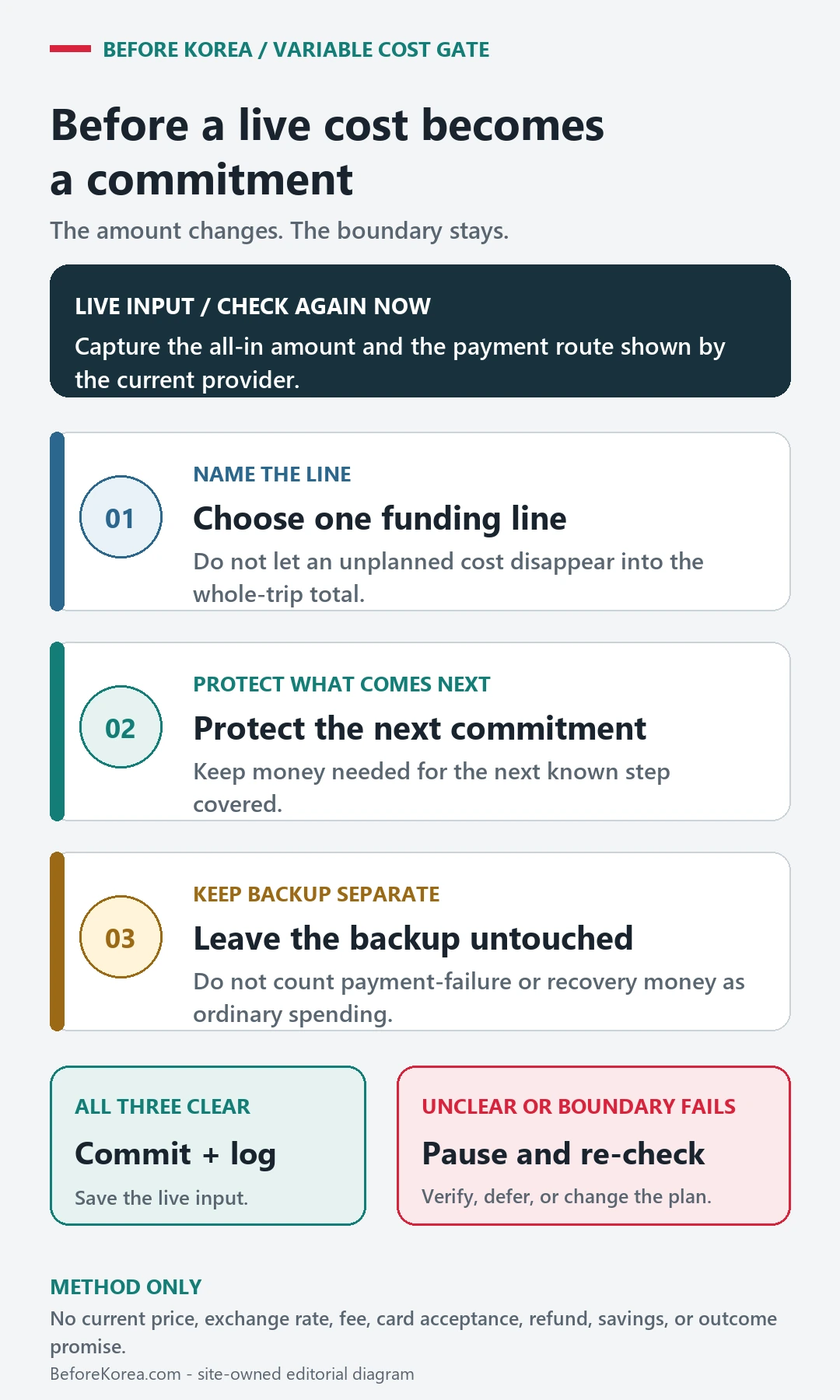
Before an extra purchase, protect the costs still ahead
| Decision | Evidence | Next action |
|---|---|---|
| Daily line | Food, cafe, local ride or small purchase | Use live total |
| Next commitment | Known ticket, route or meal still ahead | Keep it funded |
| Payment backup | Cash or second independent route | Hold separately |
| Full trip | Room, airport and long-distance totals | Use the budget workbook |
Before adding a cafe stop or taxi, check what is left after today’s remaining meals, transport and booked plans. Keep the separate cash or card backup out of that spending allowance. Payment and transport references: VISITKOREA currency and cards, Korea Customs tourist refund, Seoul Climate Card.
If an extra purchase would use money needed for your return journey or next meal, skip it or reduce a named optional expense. For accommodation, airport transfers and the whole-trip total, use the full-trip budget guide. Exchange, card, top-up, pass and refund routes can change by provider and date. Source review completed August 24, 2026. Dates, eligibility, price, inventory, access and operating rules must be rechecked on the exact current first-party page before action.