Korean convenience stores are one of the easiest ways to eat cheaply and practically in Korea. They are also one of the easiest places to make small mistakes: microwaving the wrong package, missing the allergen line, treating every triangle kimbap as hot food, assuming every store has seating, or buying a “2+1” deal you cannot carry.
Last checked: June 1, 2026. Re-check the latest product label, restaurant information, and official/public database before acting, because routes, prices, labels, rules, app screens, eligibility, and store/service policies can change.
Last updated: May 24, 2026.
Start with the package in your hand
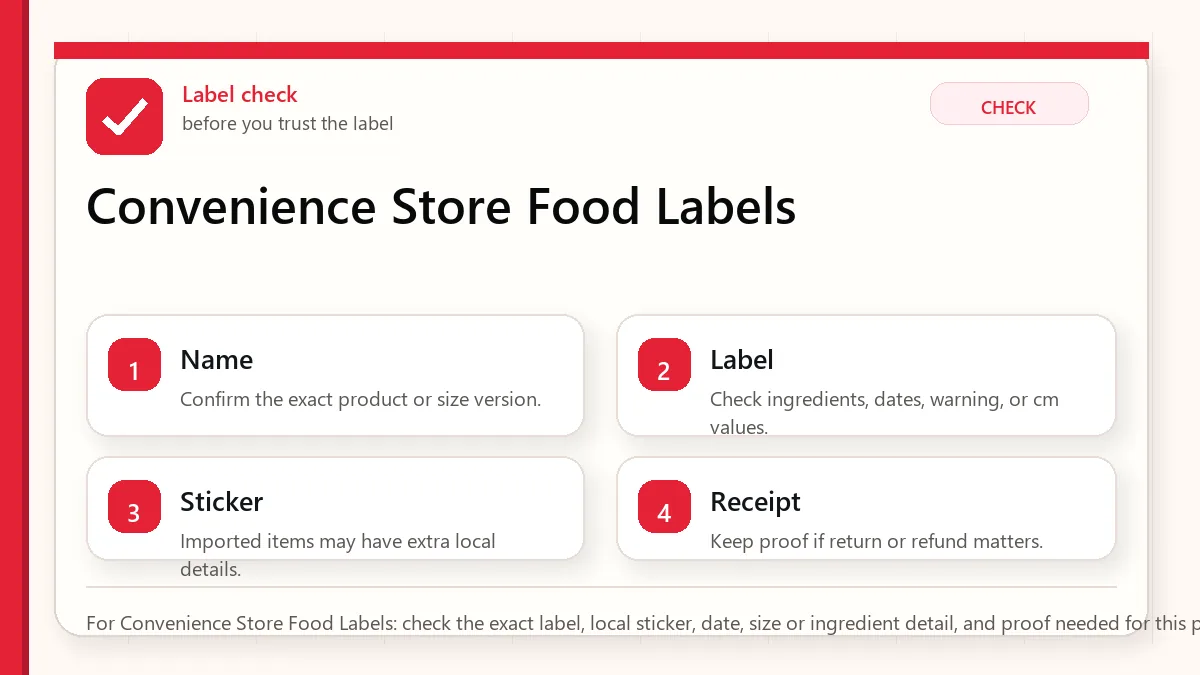
Choose convenience-store food by label first, photo second. Check the cooking directions, allergen line, date, storage instruction, and whether the package is microwave-safe. Use the store’s microwave or hot-water machine only when the label supports it. If you have allergies, packaged food is easier to inspect than restaurant sauces, but you still need translation and caution.
What to buy by time of day
| Time | Good choices | Watch out for |
|---|---|---|
| Breakfast | Sandwich, samgak kimbap, yogurt, boiled egg, banana milk, coffee. | Too much sodium if you start with ramen every day. |
| Lunch | Dosirak, rice bowl, larger kimbap, salad plus protein item. | Check microwave instructions and sauce packets. |
| Late night | Cup ramen, egg, yogurt, snack, drink, light boxed meal. | Spicy ramen can be much hotter than expected. |
| Souvenir shelf | Sealed snacks, tea, nuts, shelf-stable sweets. | Liquids, fragile items, and unclear expiry dates. |
Label words worth recognizing
- 소비기한 – use-by date. This is the modern date term visitors should recognize.
- 원재료명 – ingredients.
- 알레르기 유발물질 – allergens.
- 전자레인지 – microwave.
- 냉장보관 – keep refrigerated.
- 뜨거운 물 – hot water.
Heating mistakes
Do not improvise with microwaves. If a cup-ramen lid contains foil, remove it according to the package instructions. If a sealed pouch or plastic container needs venting, follow the label. If the item says hot water only, do not decide that the microwave will be faster. Convenience-store machines are convenient, but the package remains the rulebook.
Allergen caution
Packaged food can be safer to inspect than a restaurant dish because ingredients and allergen lines exist. But the text is usually Korean, and exact ingredients vary by product. Common allergens can include egg, milk, buckwheat, peanut, soy, wheat, walnut, crab, shrimp, squid, mackerel, shellfish, peach, tomato, chicken, pork, beef, and sulfites. If your allergy is serious, do not guess from the front photo.
Seating and trash etiquette
Some convenience stores have seating; many do not. Buy first, sit only where seating is clearly provided, keep the stay short during busy times, wipe the table if needed, and sort trash according to the store bins. Do not bring outside trash and expect the store to handle it.
Read the back, not the front
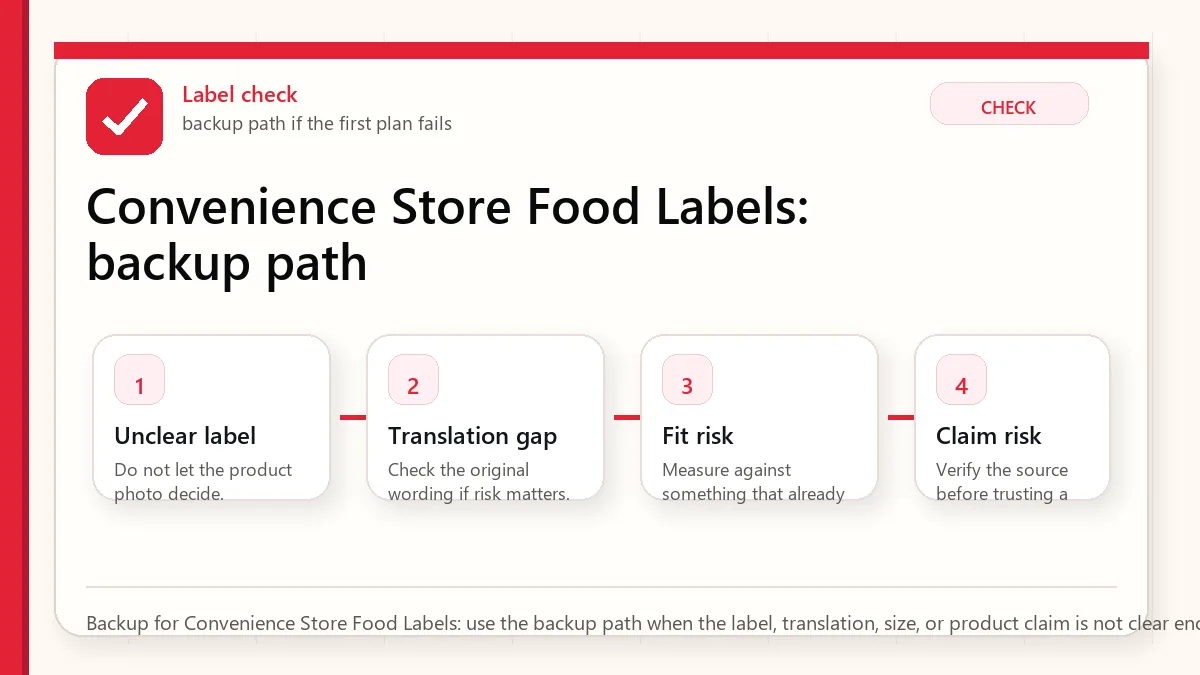
Korean convenience-store packaging is designed to sell quickly. The front photo may show cheese, spice, rice, meat, or a clean-looking salad, but the practical information is usually on the back or side: use-by date, storage method, ingredients, allergens, microwave instructions, and whether sauce packets should be removed before heating. A visitor who shops only by the front photo is guessing.
For low-risk choices, look for sealed items with clear dates, simple heating instructions, and familiar ingredients. If the product has multiple small packets, check whether any should be added after heating. If a container has a film lid, check whether it needs to be peeled, vented, or removed. Convenience-store food is convenient because the process is standardized, not because every package can be treated the same way.
A safer traveler routine
Choose the item, check the date, scan the allergen line with translation if needed, confirm heating method, pay, heat only according to the package, then eat in the designated area if the store has seating. Keep chopsticks, spoon, sauce, and receipt until you are done. If a machine, microwave, or hot-water area is crowded, wait your turn rather than rushing and damaging the package.
For serious allergies, convenience stores can be both helpful and risky. Packaged labels provide more information than a handwritten restaurant menu, but the text is Korean and ingredients change by product. Use a prepared allergy card, translation app, and conservative choices. Do not rely on a flavor name such as “mild” or “cheese” to understand the full ingredient list.
Do not make every meal a convenience-store meal
Convenience stores are excellent for arrival night, breakfast gaps, late-night hunger, snacks, drinks, and budget control. They are not a complete food strategy for understanding Korea. Use them to make the trip easier, then balance with restaurants, markets, bakeries, cafes, and simple neighborhood meals when you have more time and energy.
FAQ
Is samgak kimbap heated?
Usually it is eaten cold unless the package says otherwise. If you want a warm rice meal, choose a dosirak or bowl designed for heating.
Can I pay with T-money at convenience stores?
Many affiliated convenience stores accept T-money, but normal cards or cash remain useful backups.
Are convenience-store meals healthy?
They are convenient and often good value, but sodium can be high. Balance with water, fruit, yogurt, or lighter meals.
Related Before Korea guides
- Korean convenience store meal guide
- Korean food allergy guide
- How to order food in Korea
- Payment in Korea